

Whistler is a Mecca for Mountain Biking… and Maybe Community Design…
I was just in Whistler to watch the first Downhill Mountain Bike World Cup race to be held there, but I haven’t been up to Whistler in a few years, so in addition to some bike racing, it was a chance to take a brief look at how this mountain town is designed, and how it came out on top of all the medium-sized communities in the RITC BC Bicycle Infrastructure Index. Come for the urbanism, stay for the bike racing, or vice versa…
When we released the BC Bicycle Infrastructure Index, it was perhaps a surprise to see Whistler top the list of medium-sized communities, but in hindsight, it shouldn’t have been. If you like getting around by bicycle, if you like walking through a pedestrianized centre… You don’t have to go to Europe… Whistler is pretty close in many respects… The Valley Trail network makes up most of the towns urban bike infrastructure…
The Valley Trail is well signposted, and yes, it is a multi-use path, shared even with the bears… While there might be some haters of multi-use pathways, give me a way to get around the entire town separated from traffic, from any neighbourhood to any other, and that’s a pretty good place to be… The signs says recreational trail which I think is selling it short a little. It’s absolutely a transportation corridor too…
The trail continues through traffic calmed neighbourhoods with a small mountable curb providing separation… While that could invite parked vehicles, it also allows slow driveway access to the single family homes, and if the pathway were to be busy, it would be fairly easy to bypass people on the road… What’s that in the background there?
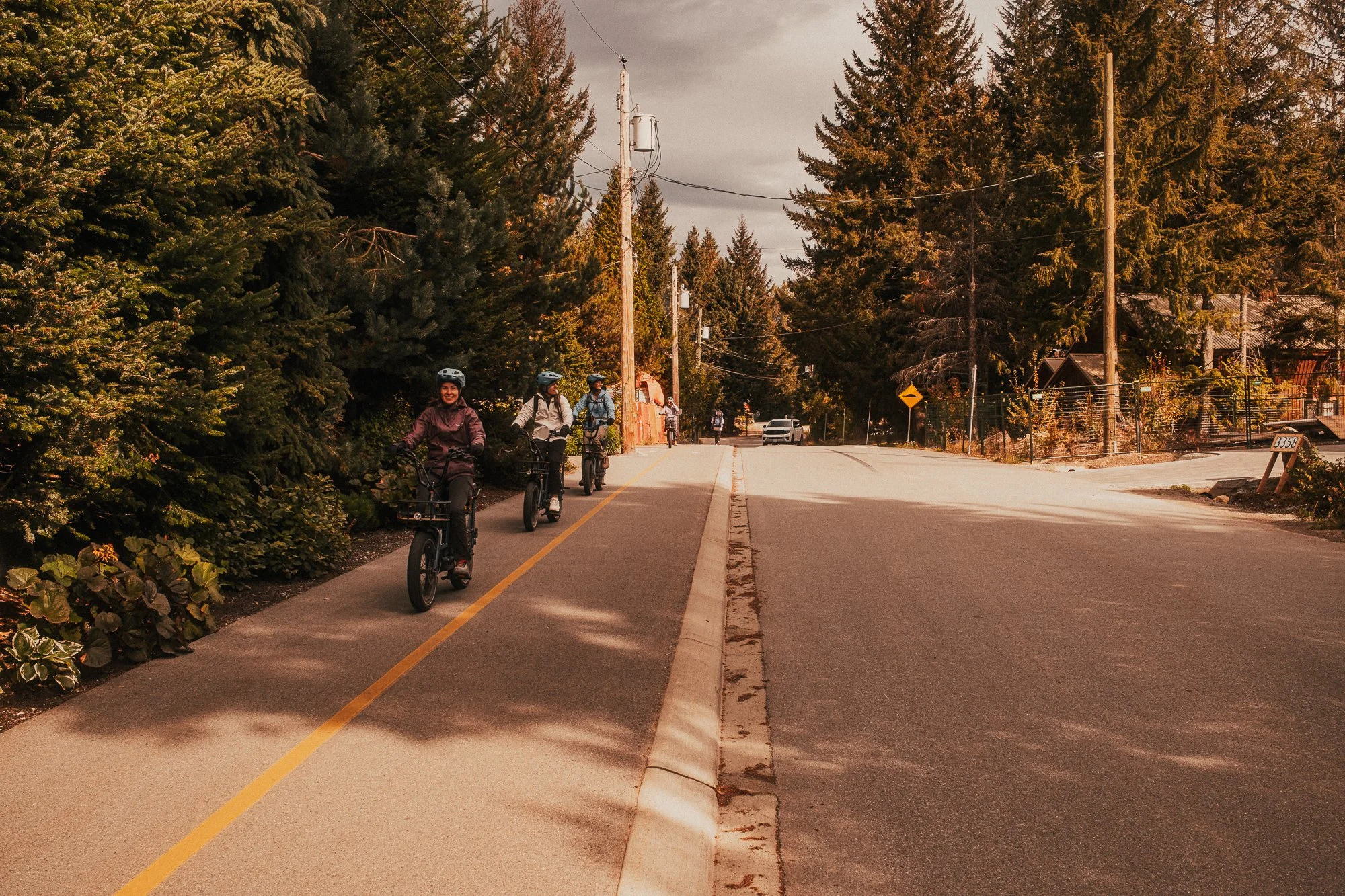
Not speed bumps… But speed cushions… In Whistler…
I’m not a fan of maze gates or trail obstructions to prevent access, but where there is a limited road network, there is potential for short-cutting via the pathway. There may still be better ways to design this to prevent car access, but these gates were spaced better than some… Going Fast? Please use the road…
Crossing the highway into the village centre via an underpass… I’ve driven over this so many times without appreciating the pathway went under there…
While my gut said the town’s design was inspired by European mountain towns, I had to check the Whistler Museum website and that proved to be the case. The pedestrian-orientated village centre was deliberately shaped around the terrain rather than imposing a conventional street grid, with vehicles and servicing kept largely out of the pedestrian environment. Busyish, even on a Monday morning after the race…
You might write Whistler off as a case study in good urban planning based on it’s somewhat sprawling neighbourhoods, or its resort municipality status, and that does give it some advantages over a regular town I think, but maybe there’s something in there… Maybe every community even those that are largely single family homes could lean in a little to how Whistler is laid out…
You must always walk your bike… Or you’ll usually get yelled at!
Now, can every community just copy the Whistler model? With a resident population of around 14,000, but a hotel population of around 30,000, the demographics are a little different in Whistler. When combined with day visitors, Whistler has a captive audience of people looking to bike or ski, shop, eat, and drink. The pedestrian centre can easily be filled relative to a conventional town of the same size. But maybe it doesn’t have to be the whole centre that is pedestrianized, maybe any town can start smaller, a square, a street, a couple of blocks, see how it goes, and find the right balance… Just make sure that wherever you do pedestrianize, the adjacent land use provides people with a reason to be there, a reason to stay there, to take a seat and watch the world go by…
The Valley Trail is quite special though. I think every community through could benefit from an active transportation spine through it, with every neighbourhood connected to it… Brand it, give it a name, make sure the wayfinding is unique, make it an amenity that connects the community…
That’s it for the urbanism, onto the bike racing…
Practice Day
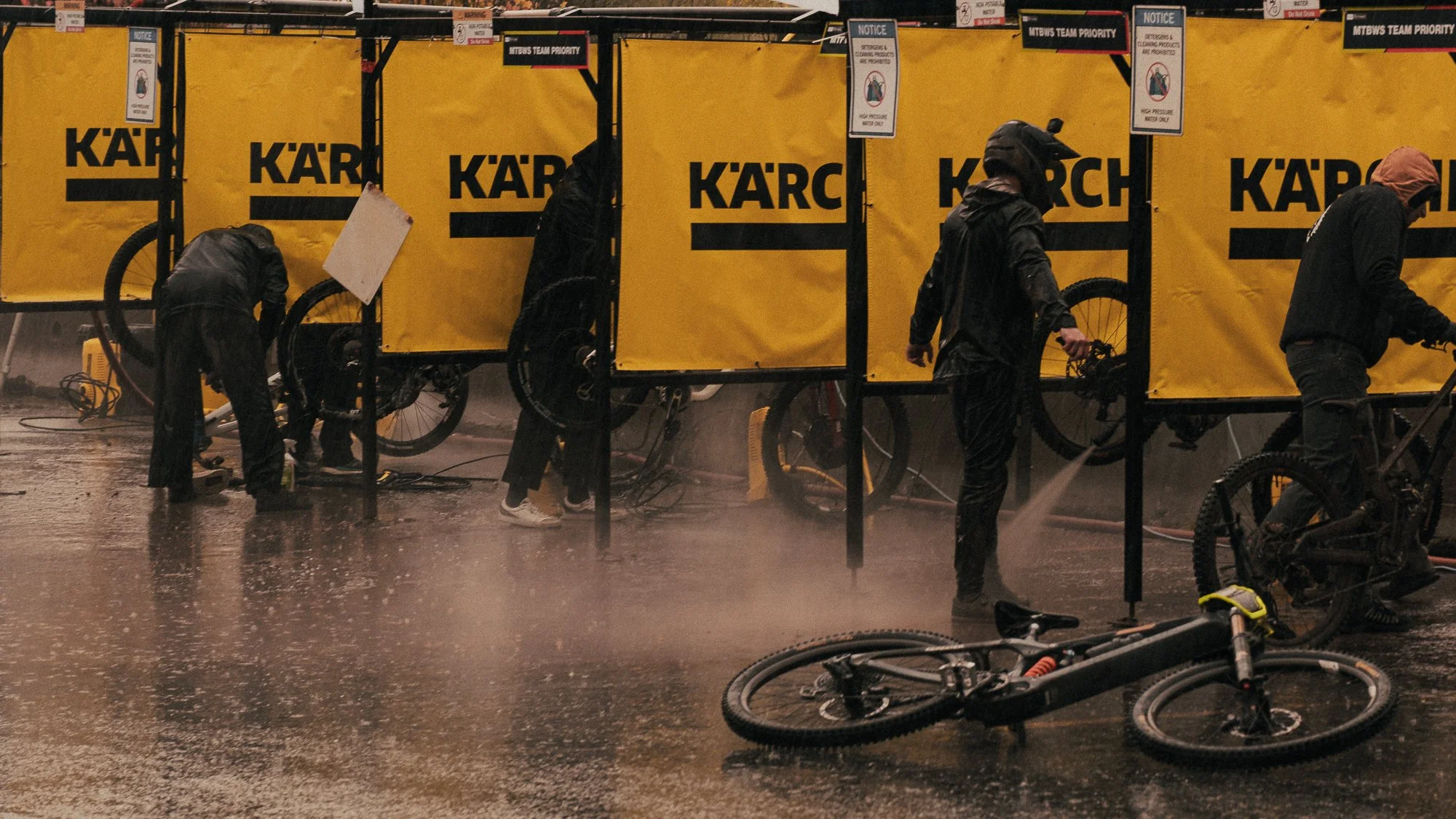
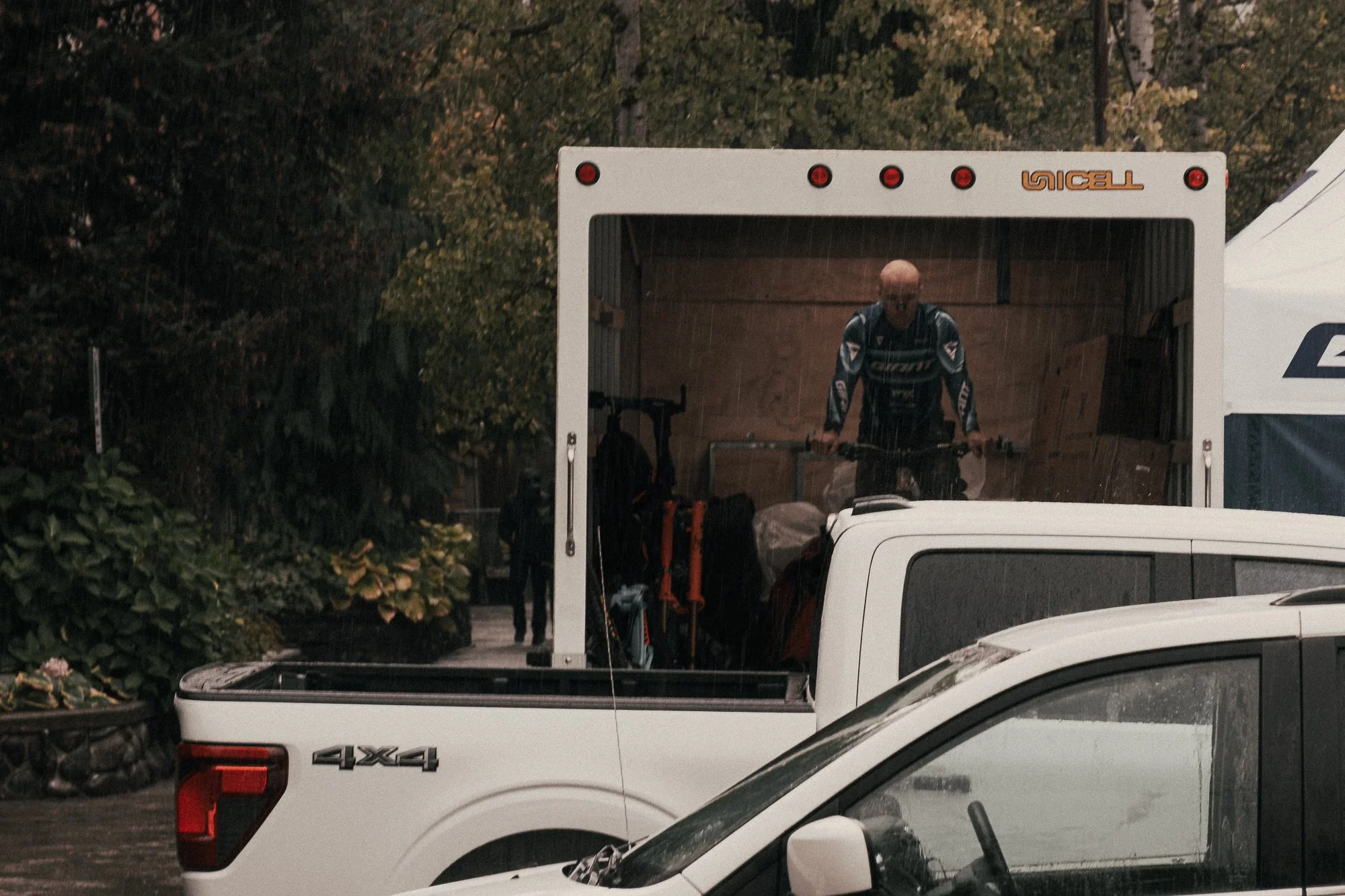
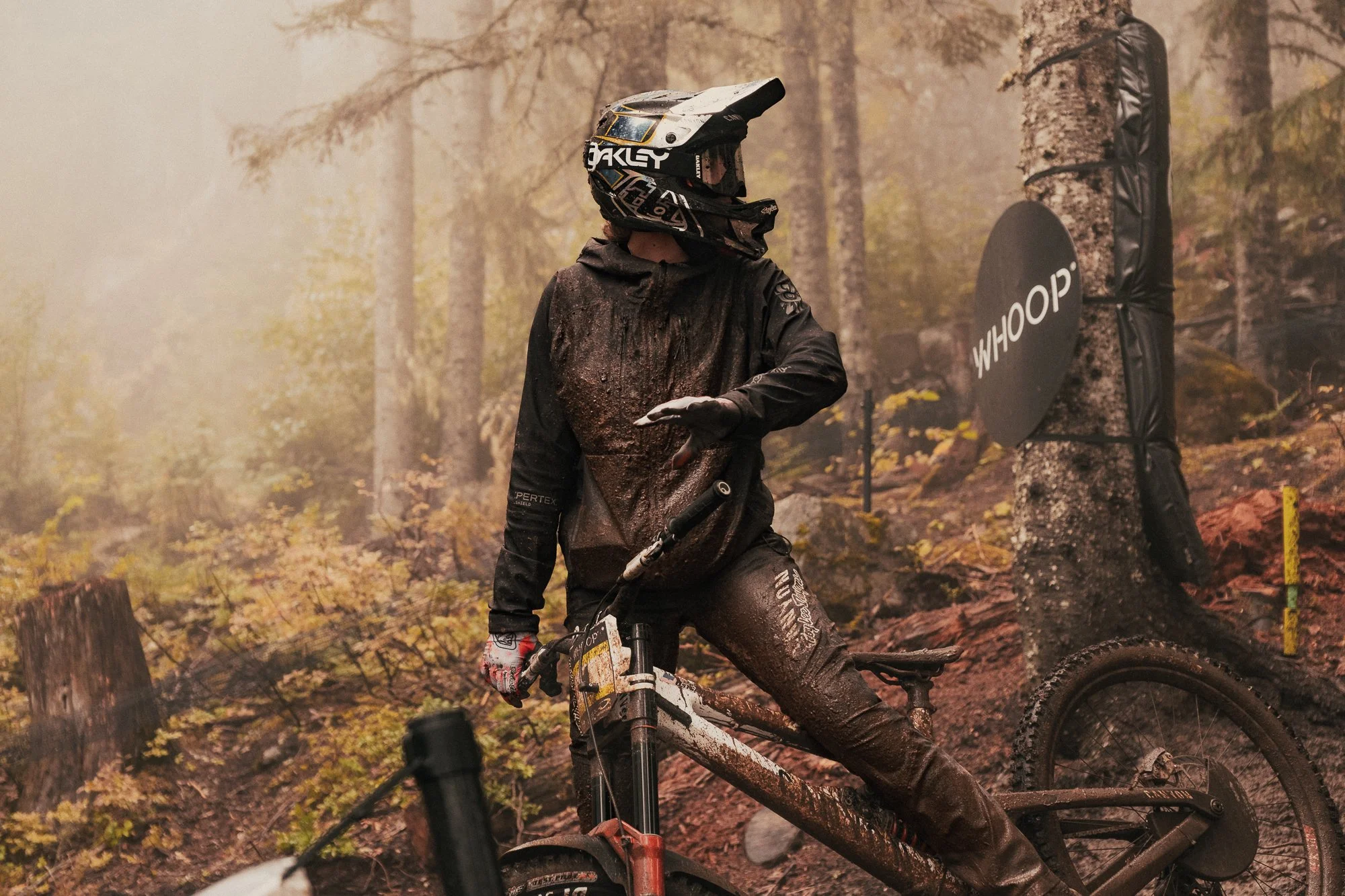
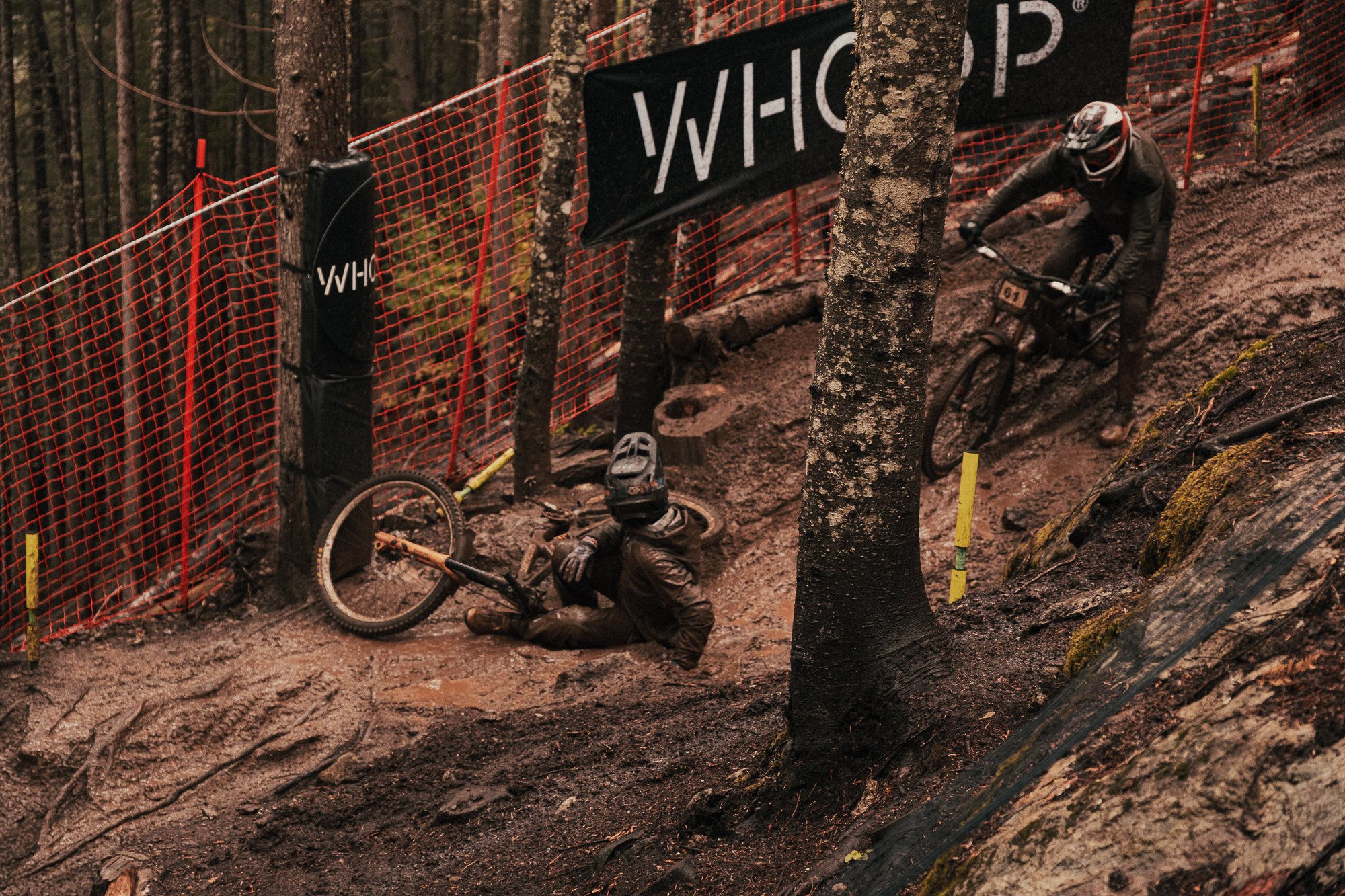
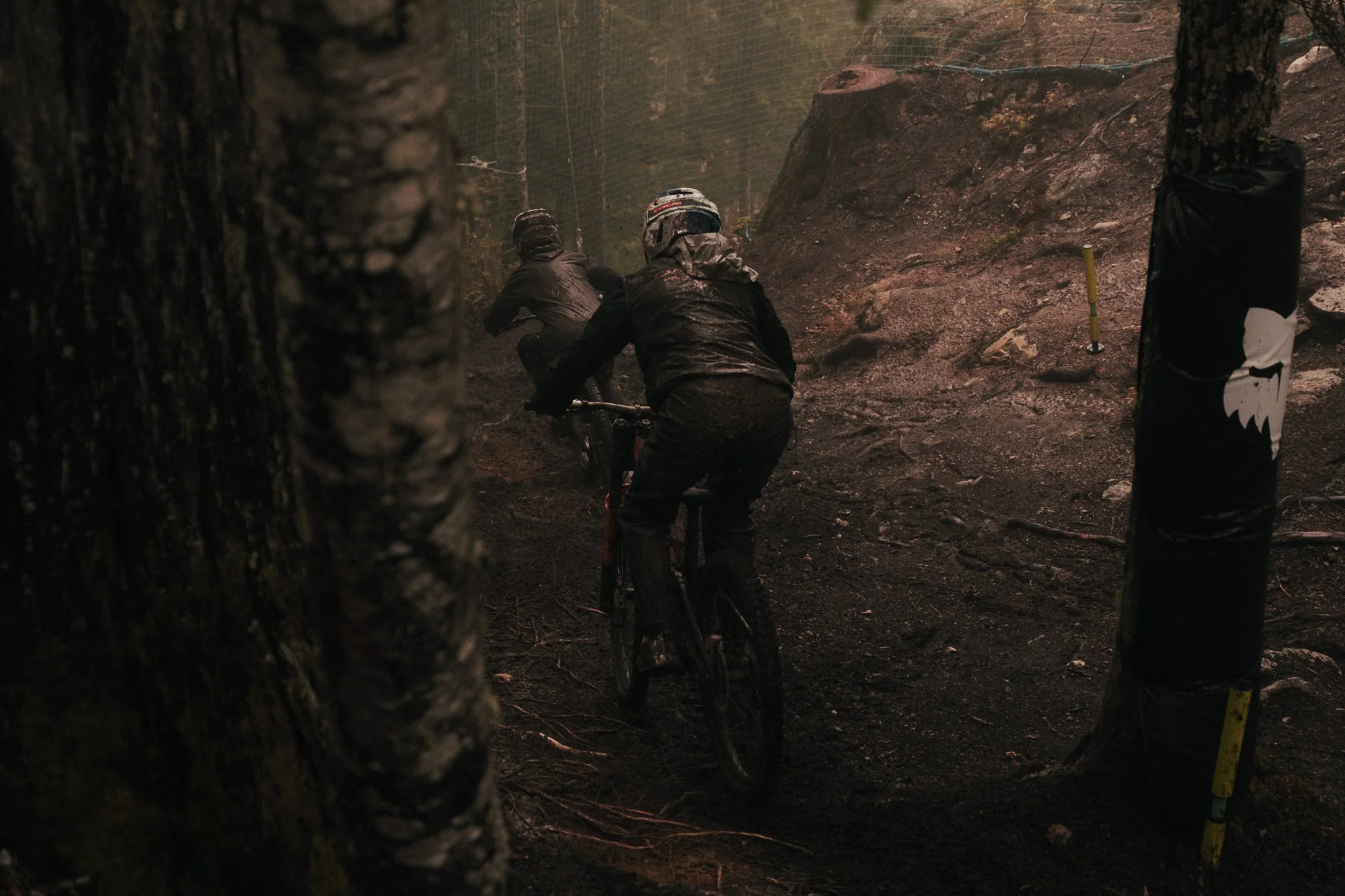
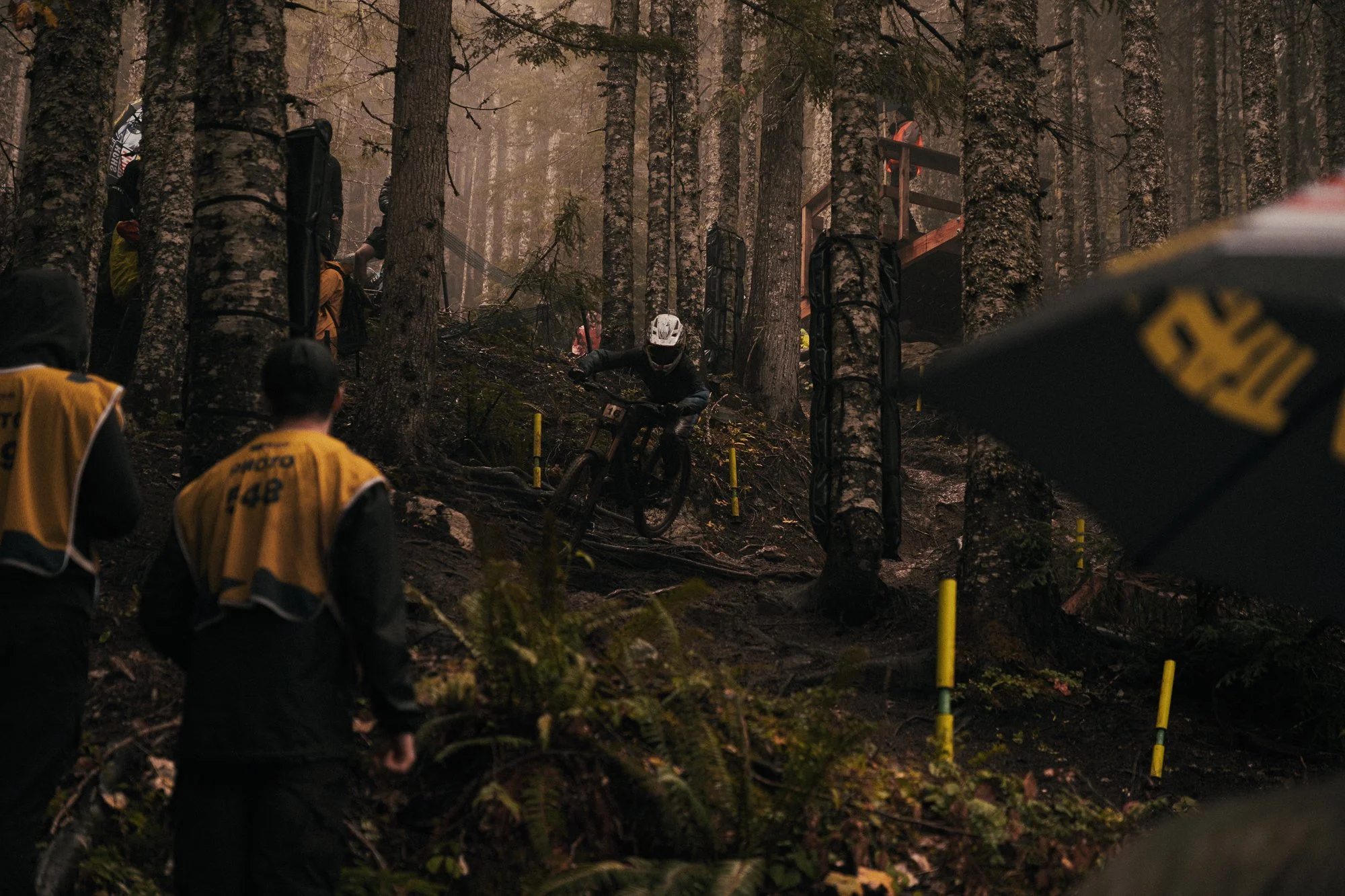
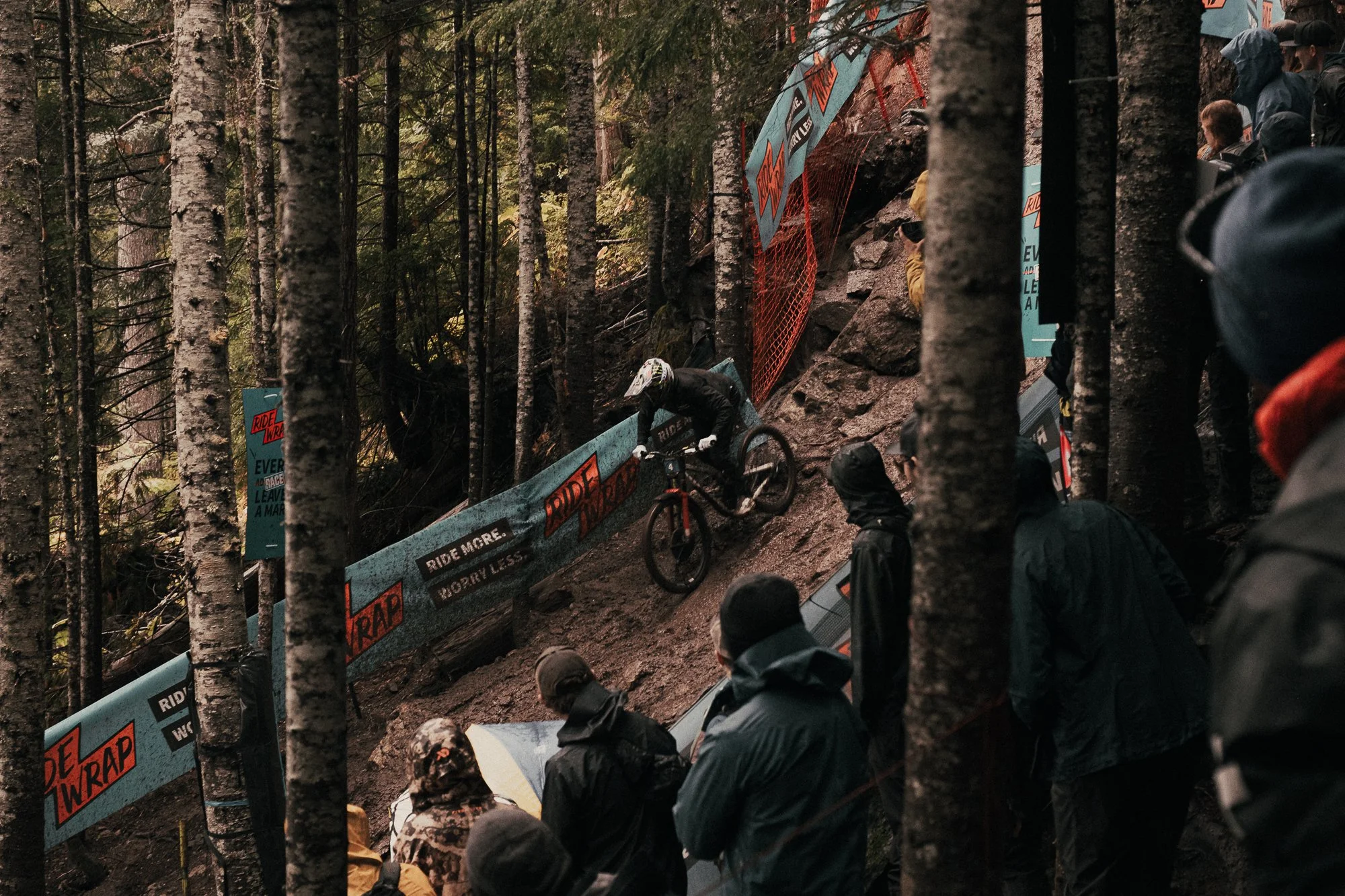
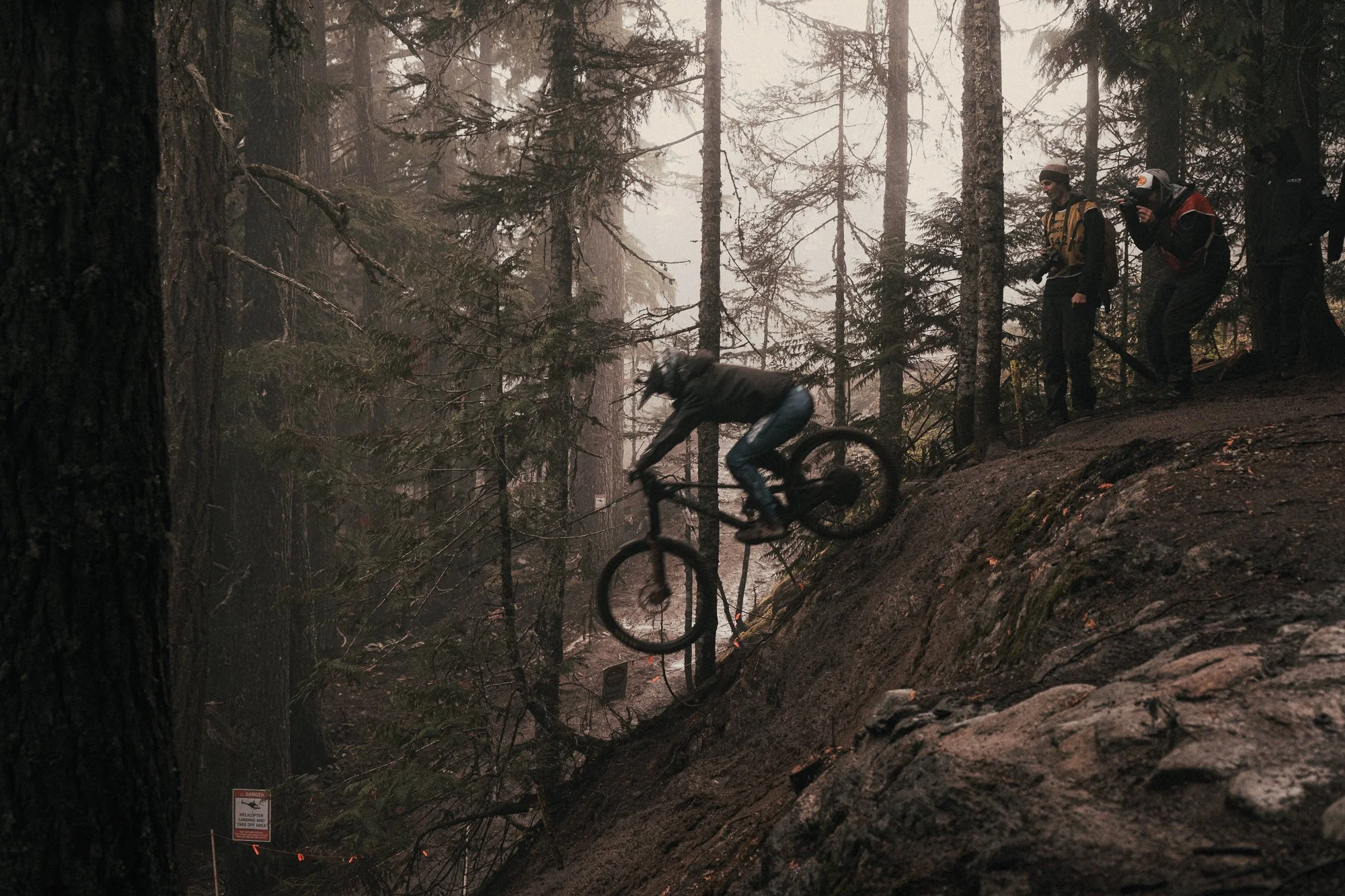
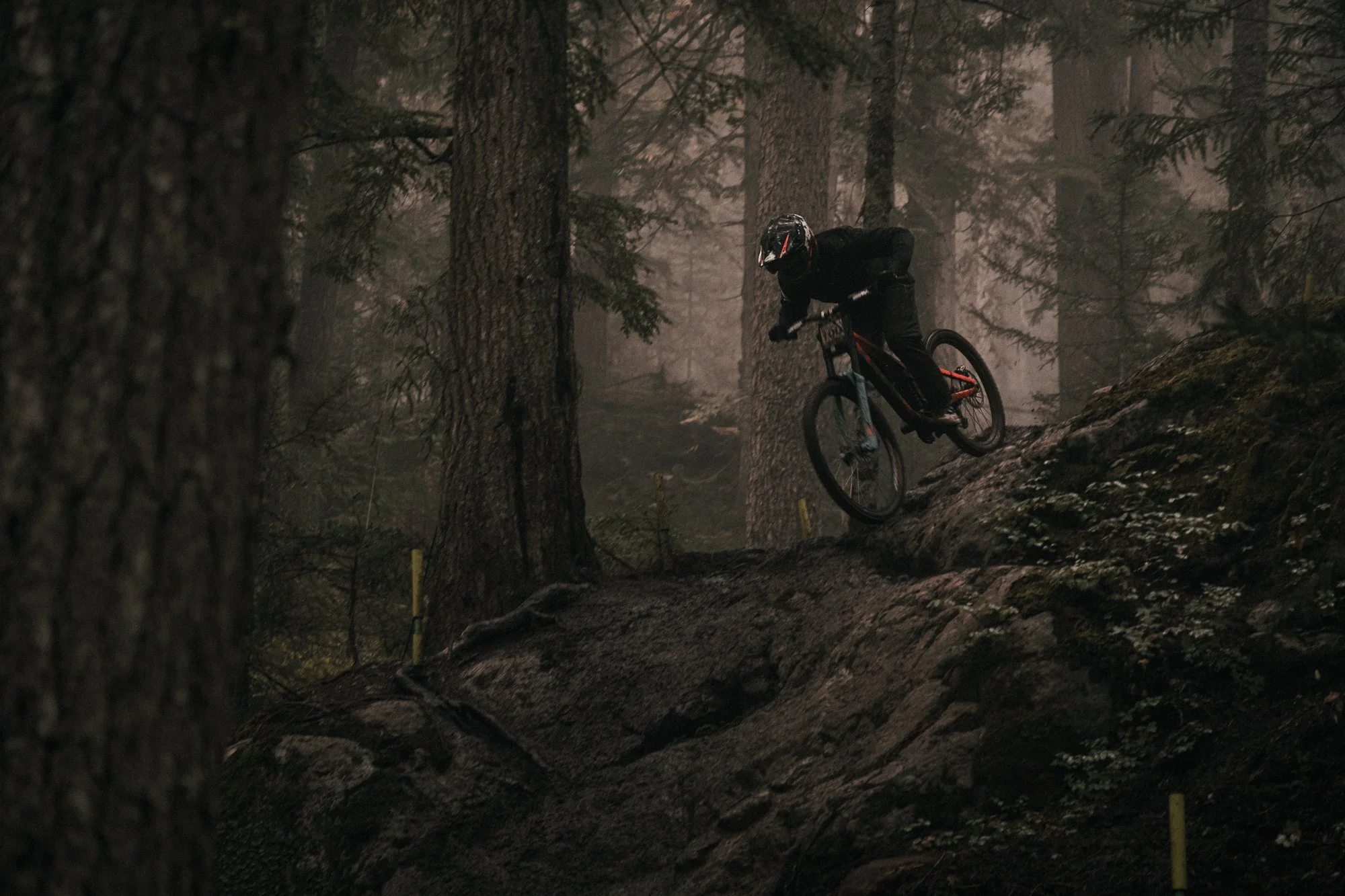
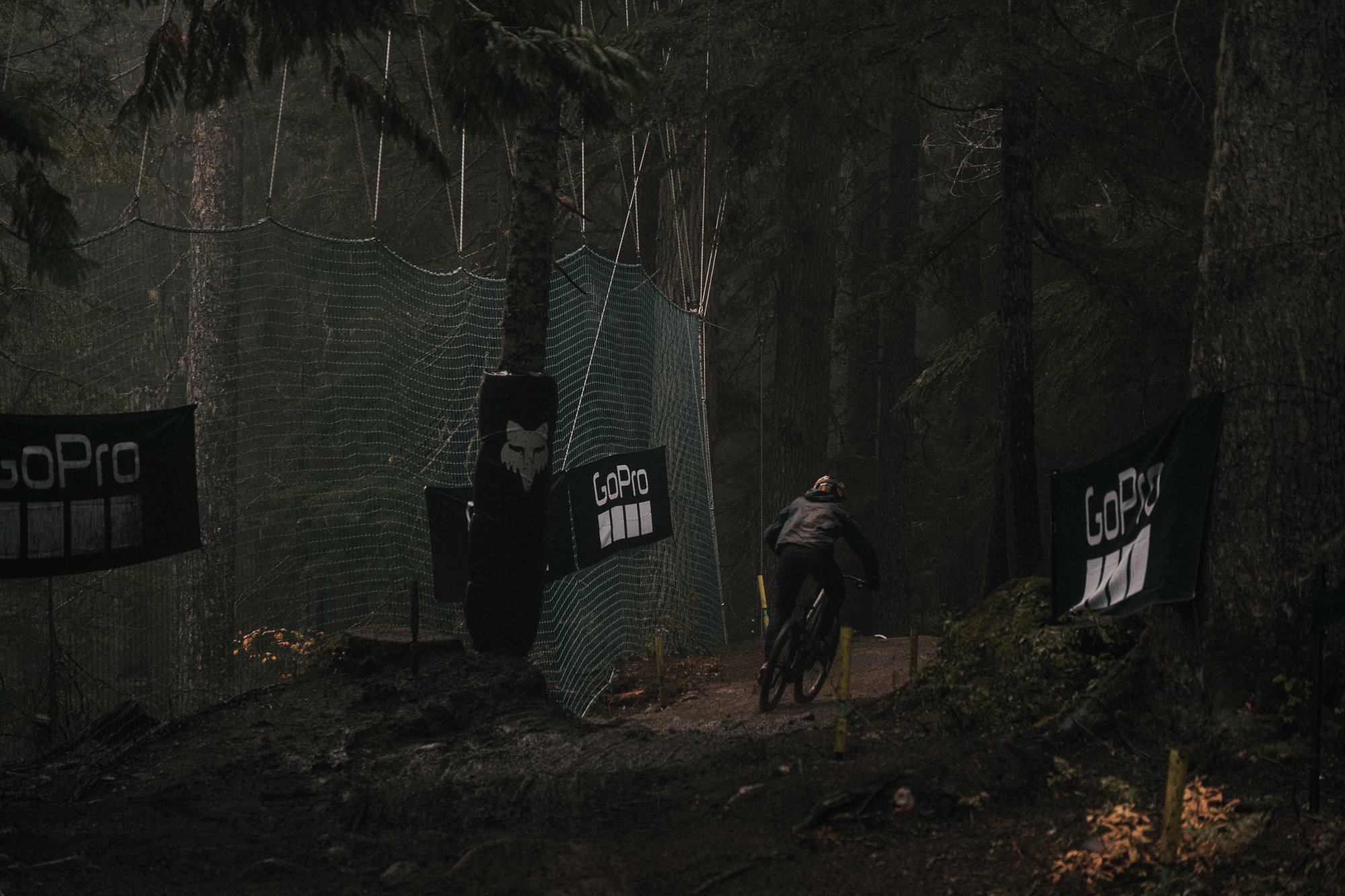
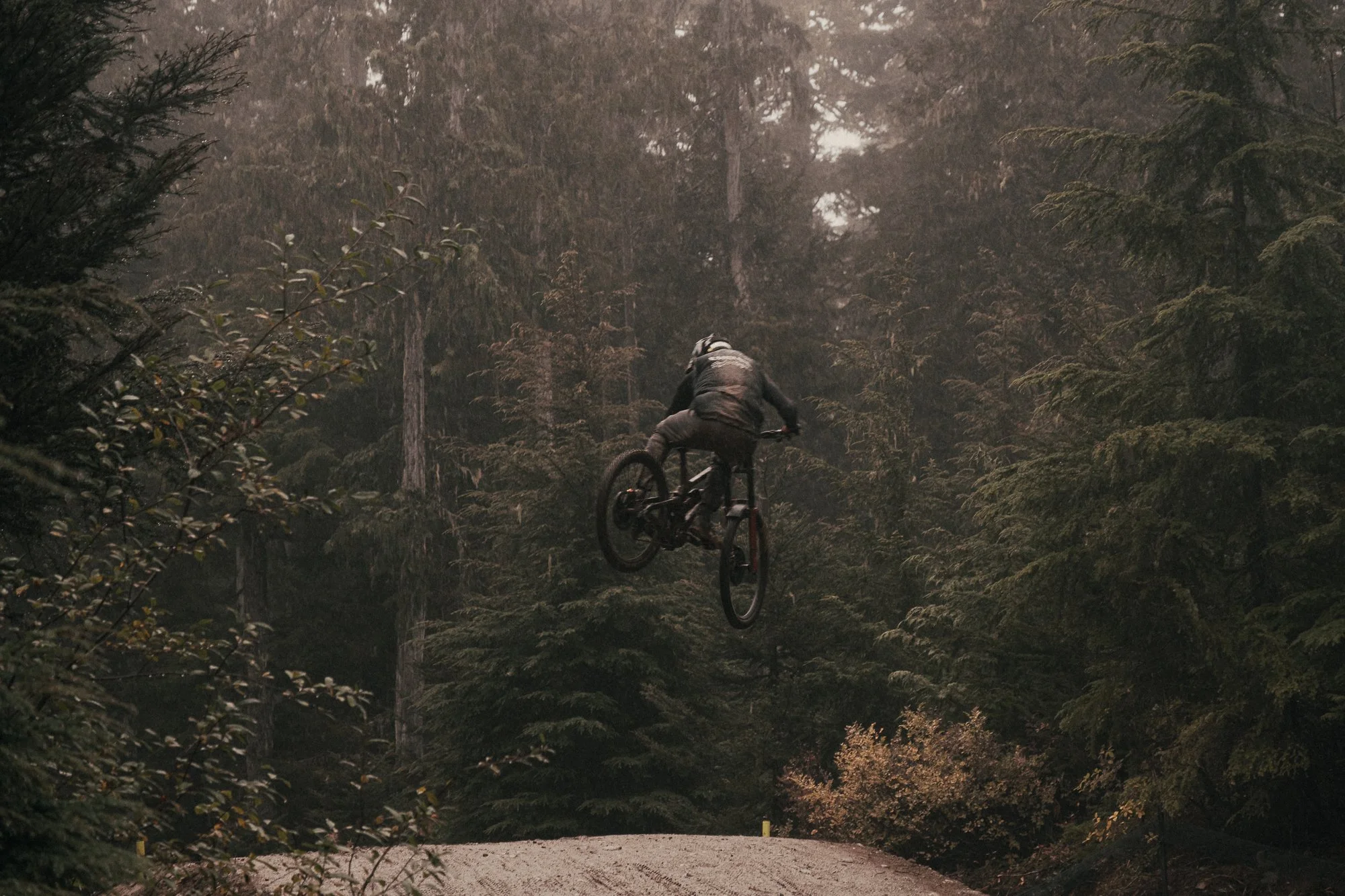
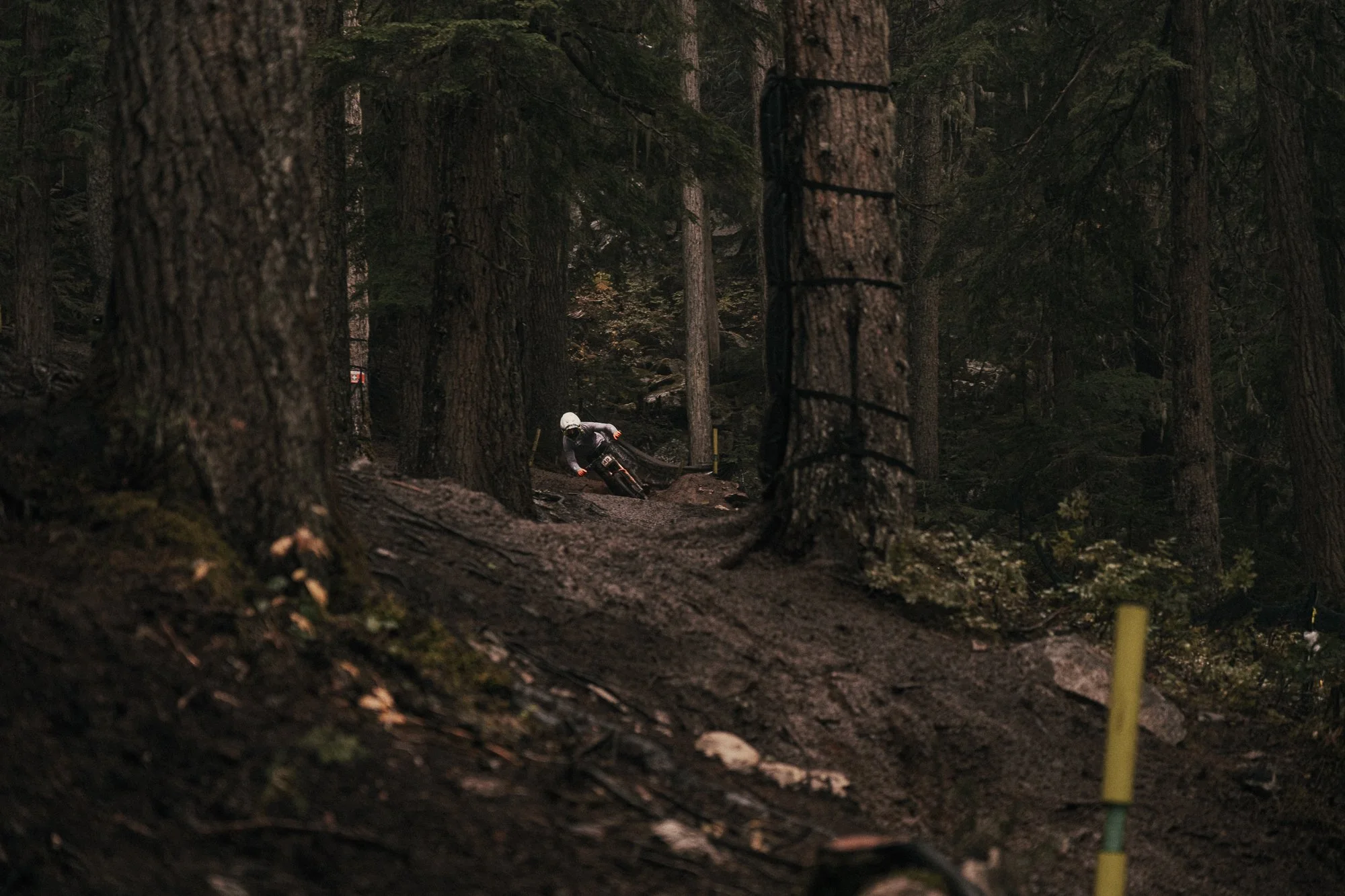
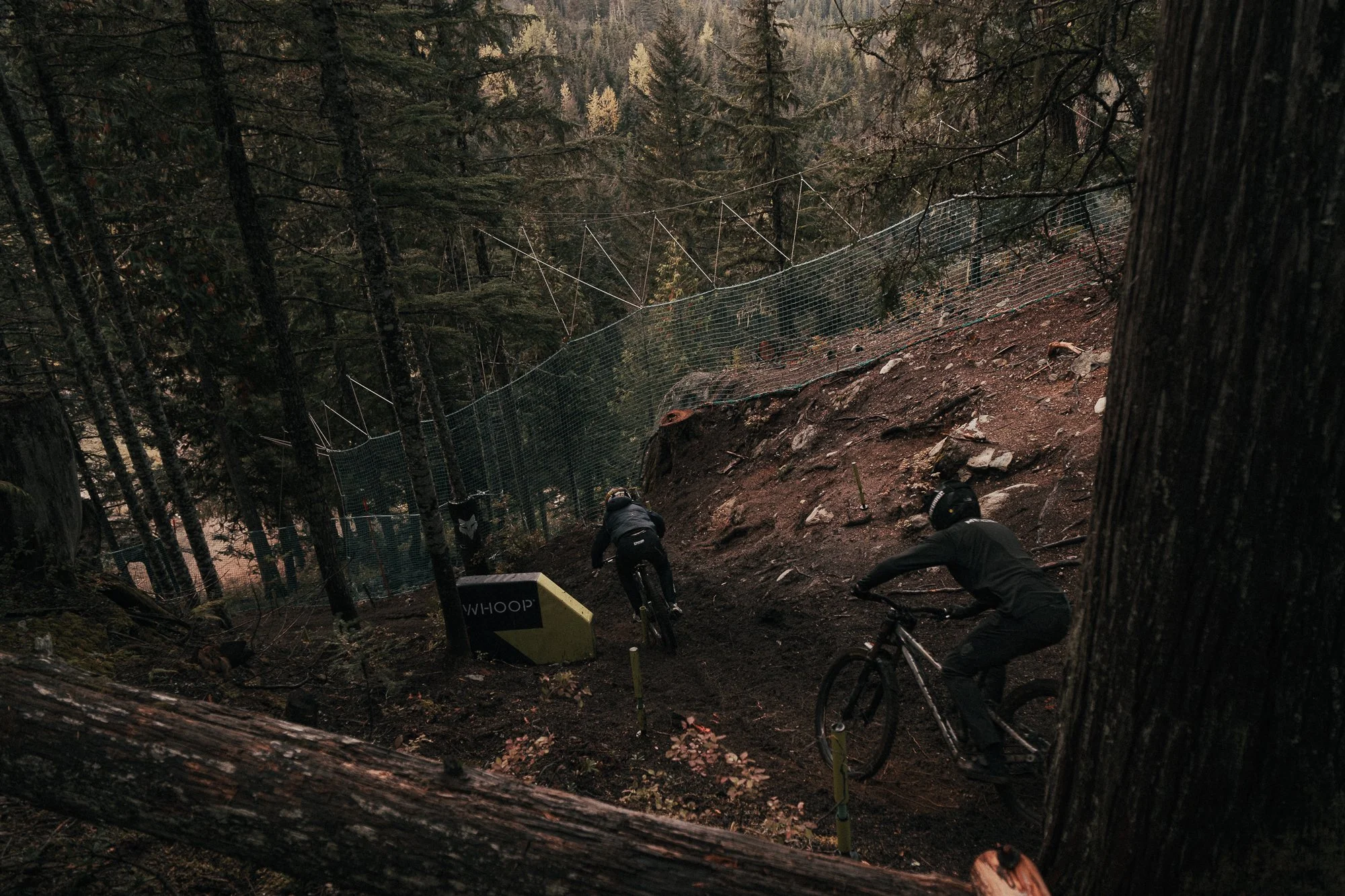
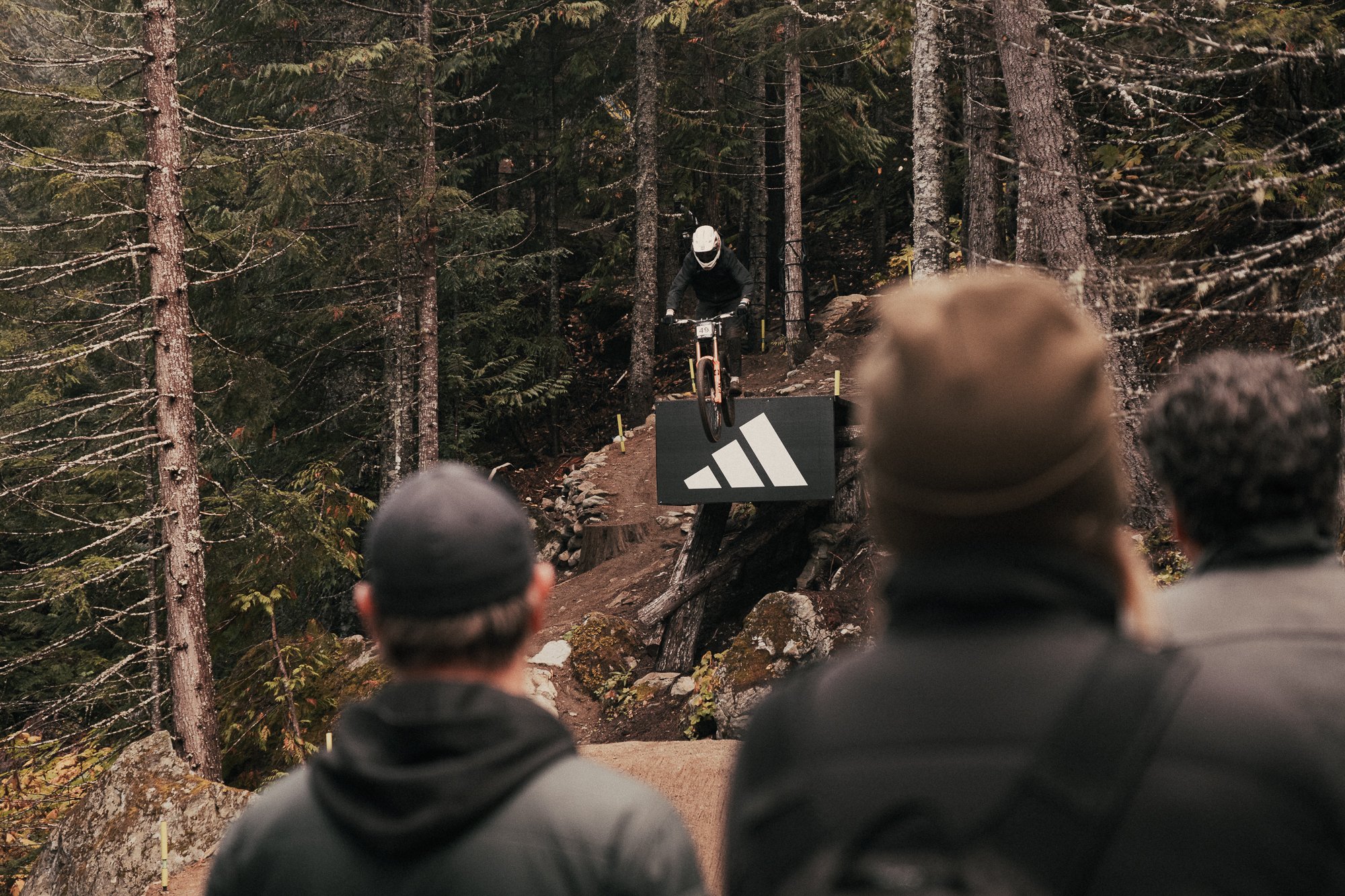
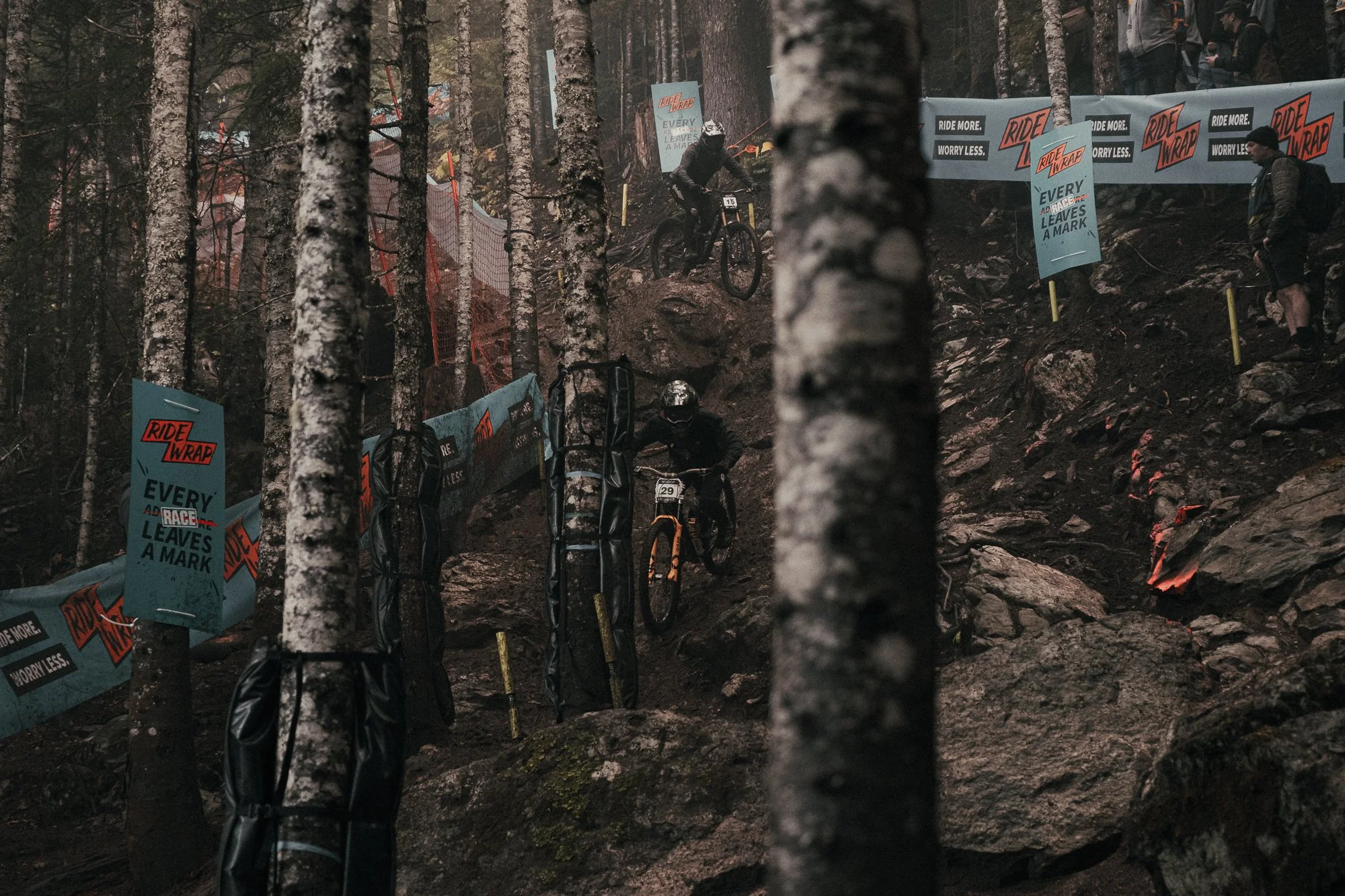
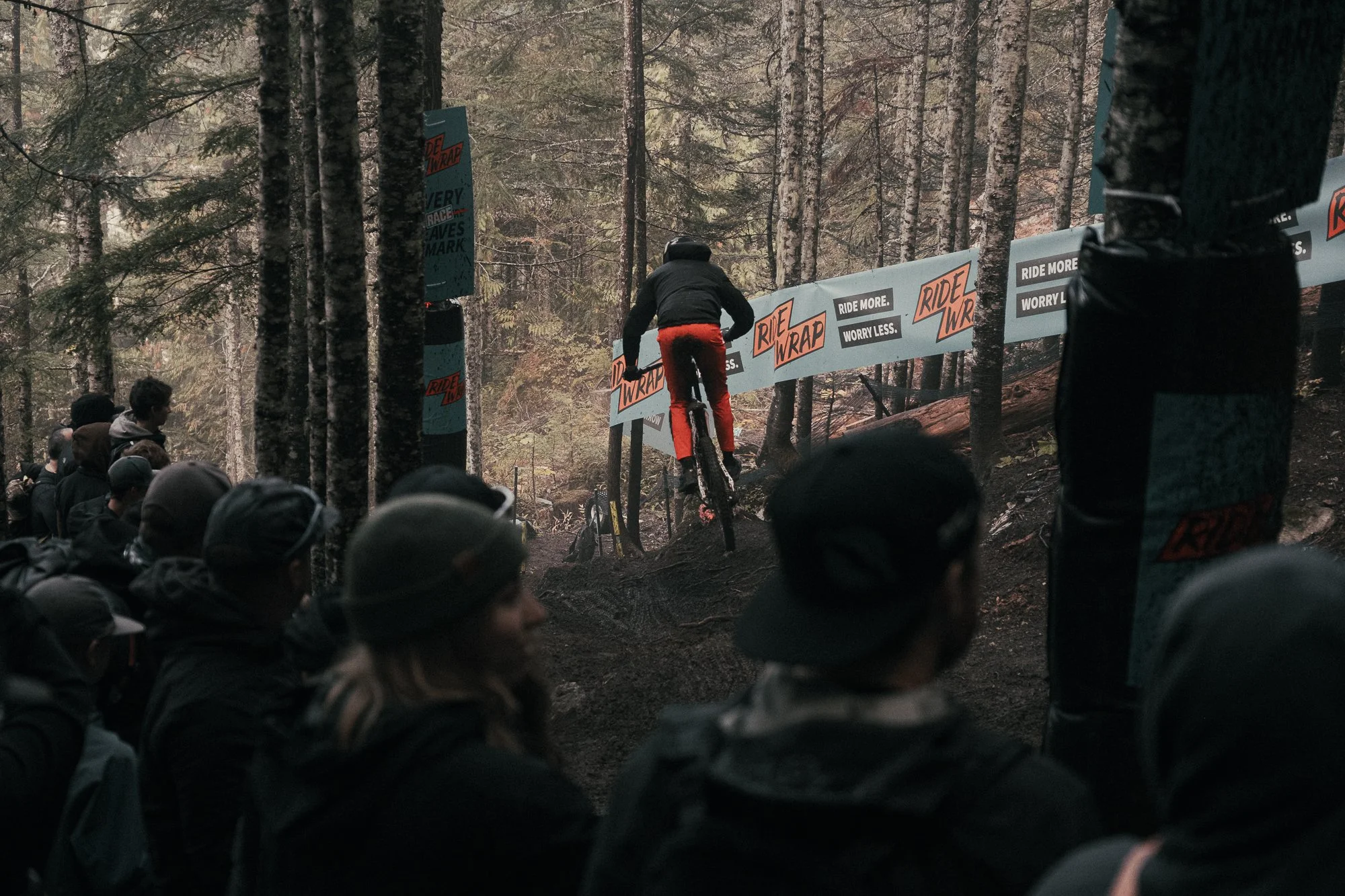
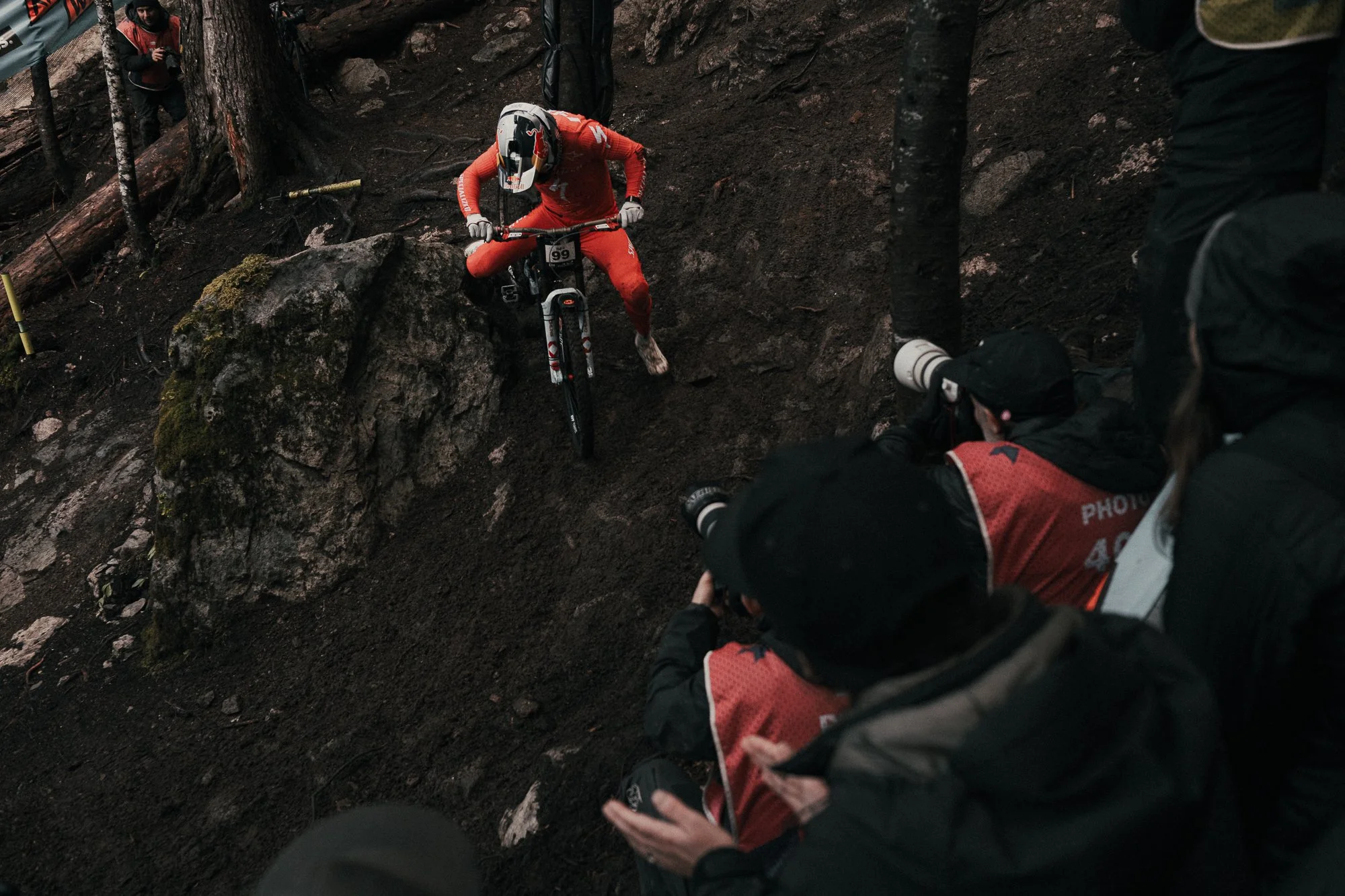
Mountain bikes brought me to Canada, but while I’d rather be riding around the city taking photos of protected bike lanes than pushing my limits on a mountain bike these days, I still love to watch the downhill racing as much as I do a good ‘Not Just Bikes’ video. The first ever DH World Cup race in Whistler was too big a deal to miss… Downhill mountain biking is no different than downhill skiing, a race against the clock, fastest wins… Practice day was a wet one with rain through the day making for challenging conditions for racers and spectators alike. The camera held up pretty well and a few of my favourite photos as we walk up the hill are included below. Click to enlarge…
Qualifying Day
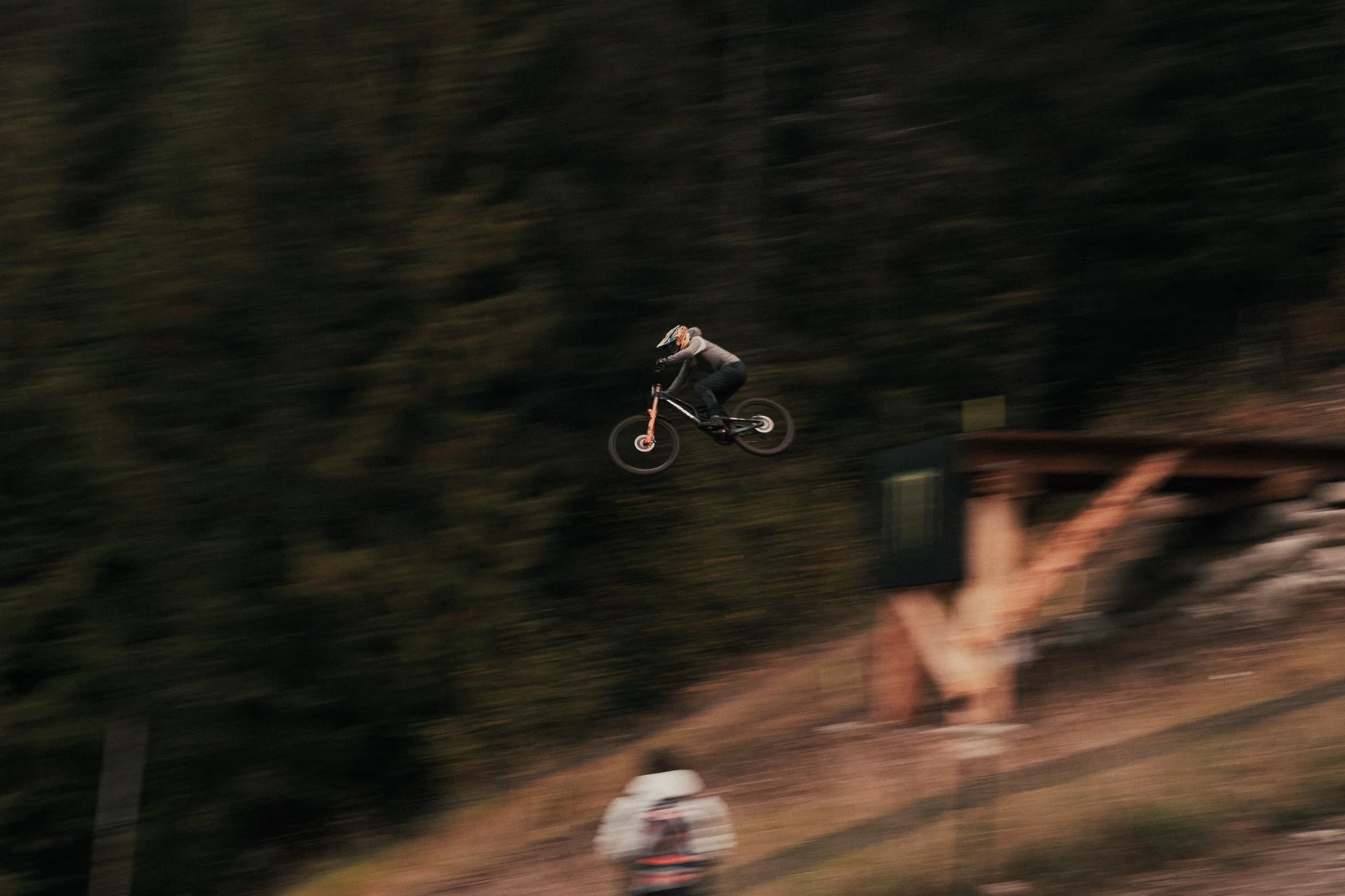
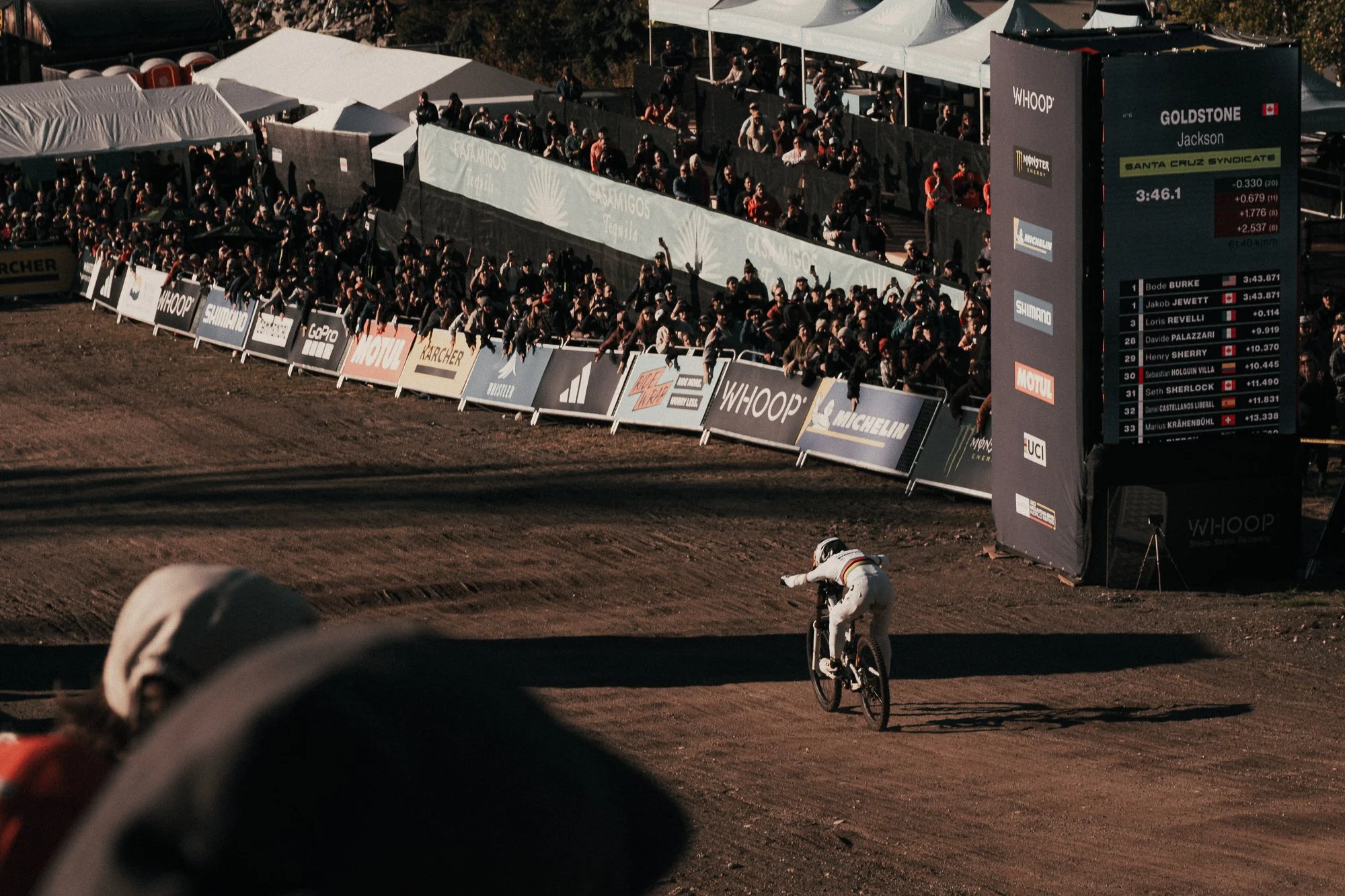
After getting used to the track in horrible conditions on practice day, qualifying reduces the field to the top 30 men and top 15 women and sorts out the start order, the fastest qualifiers dropping last. Conditions were drying up, the woods were still damp…
Race Day
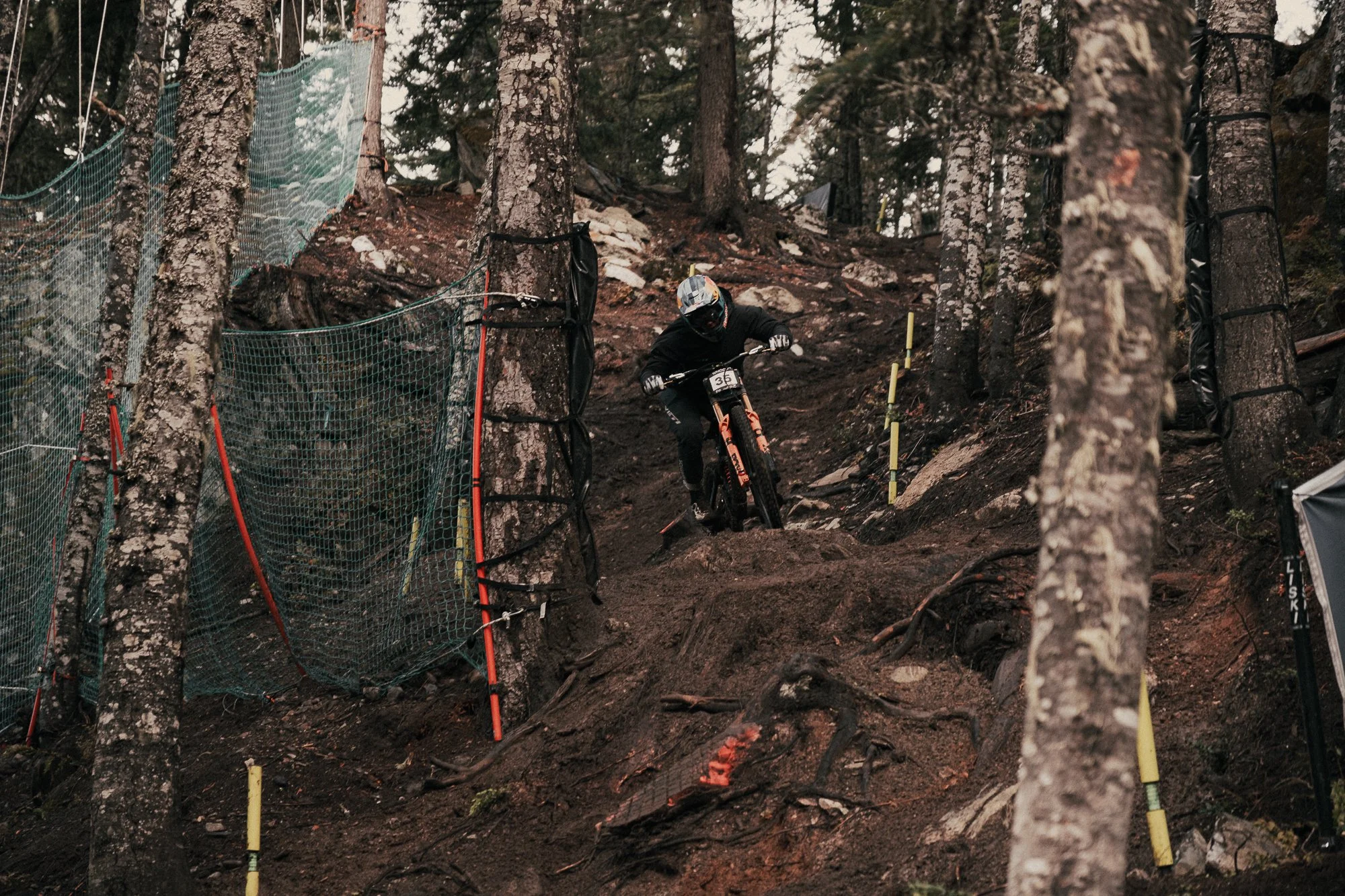
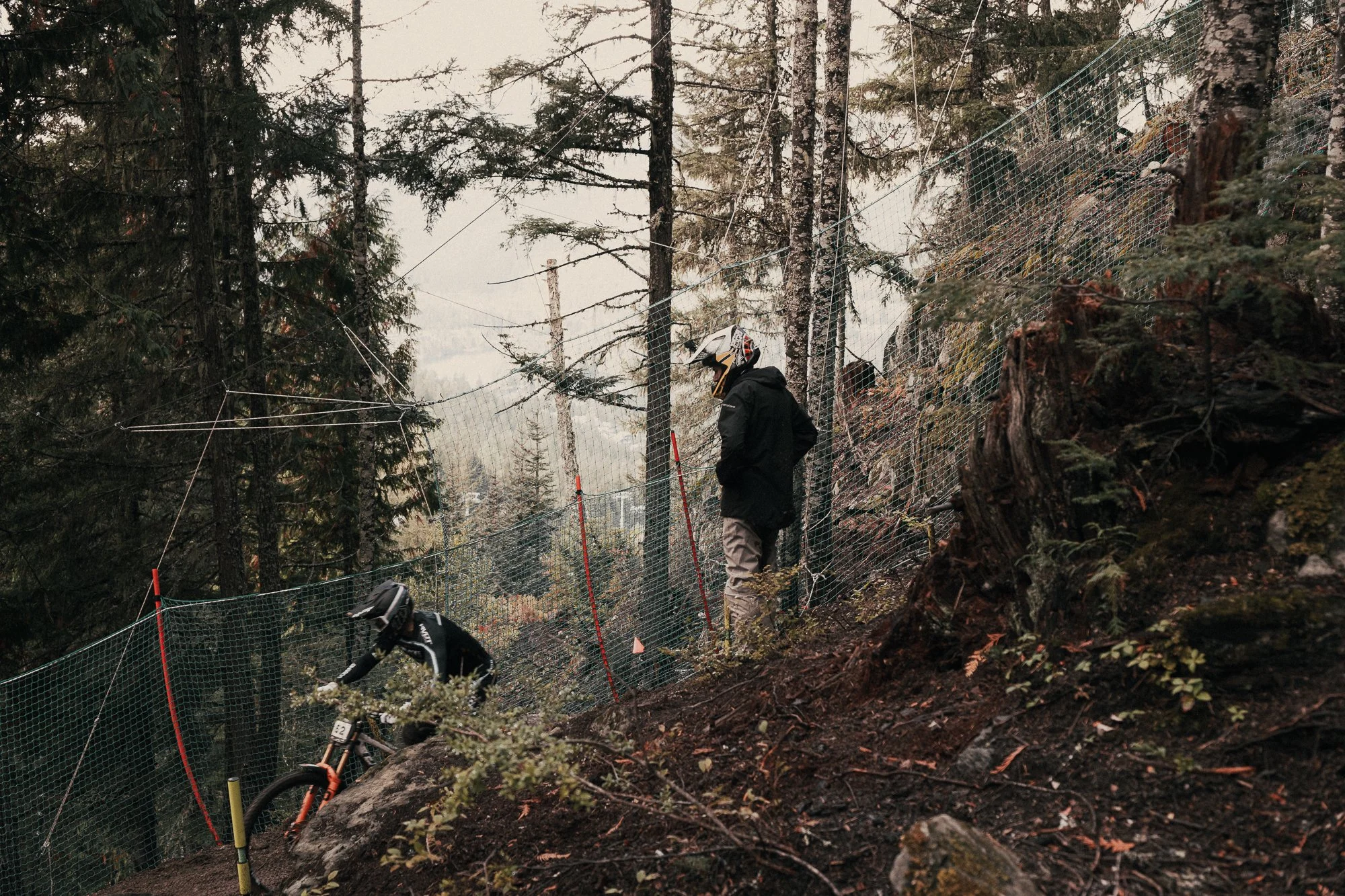
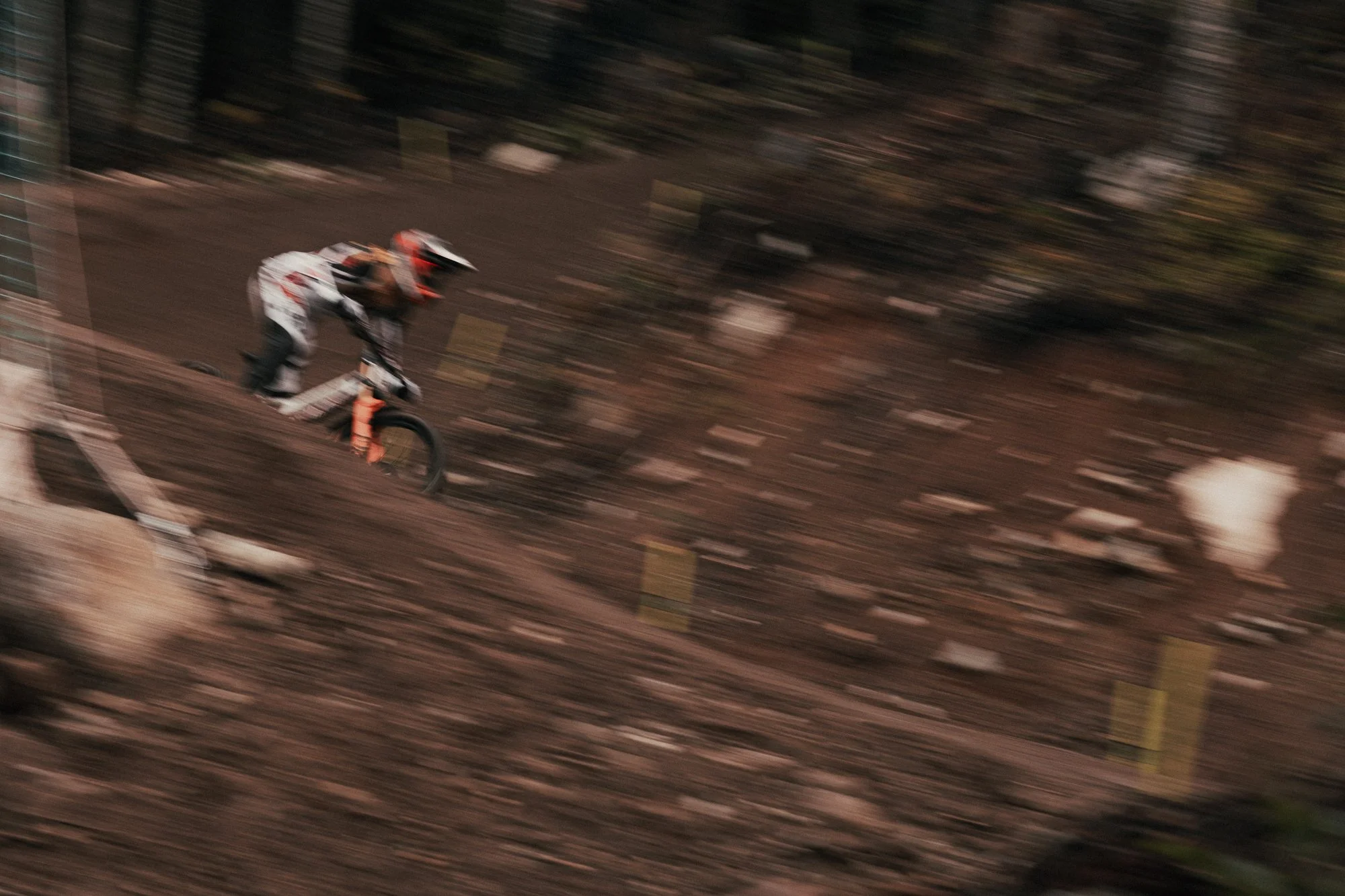
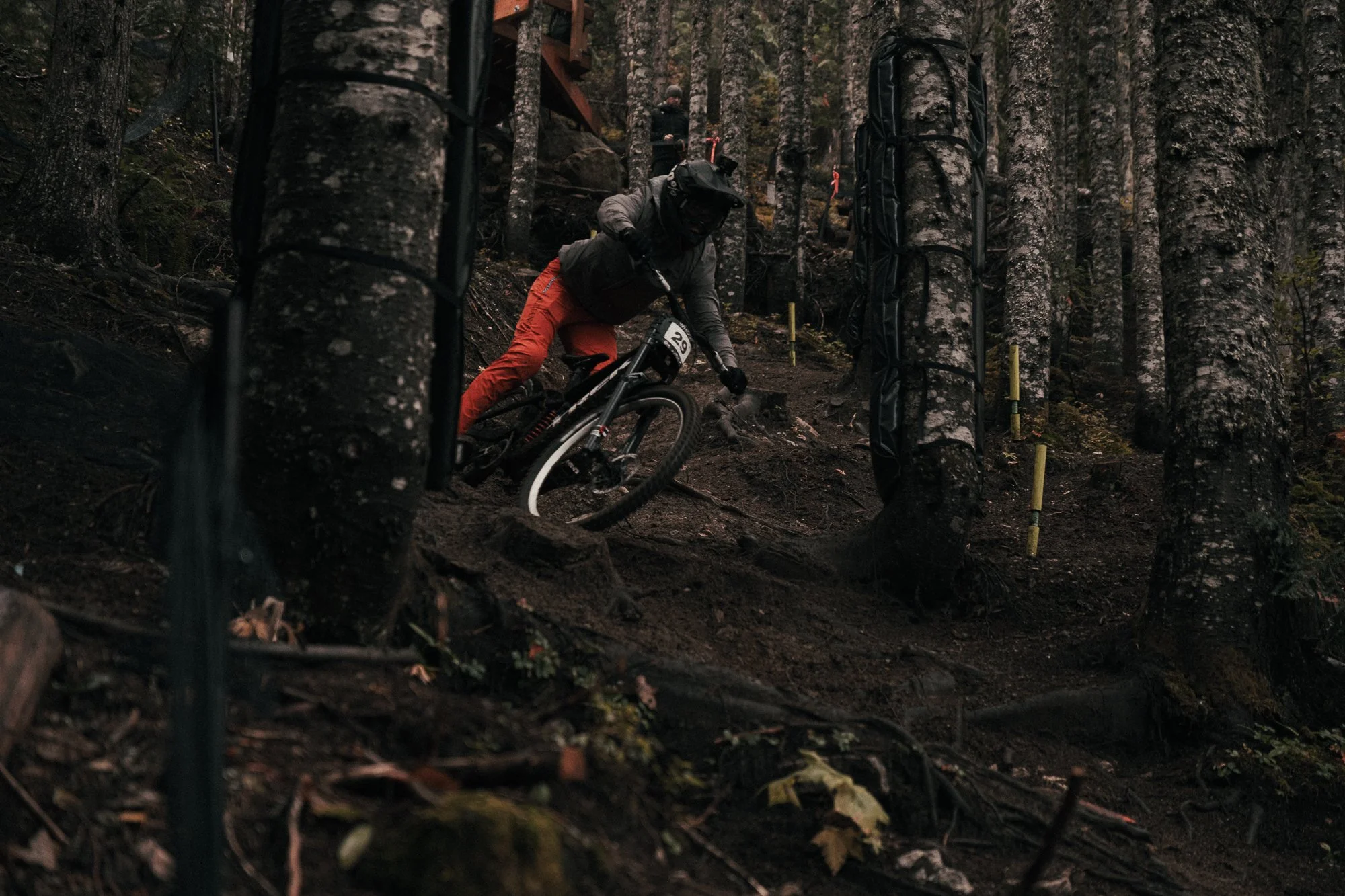
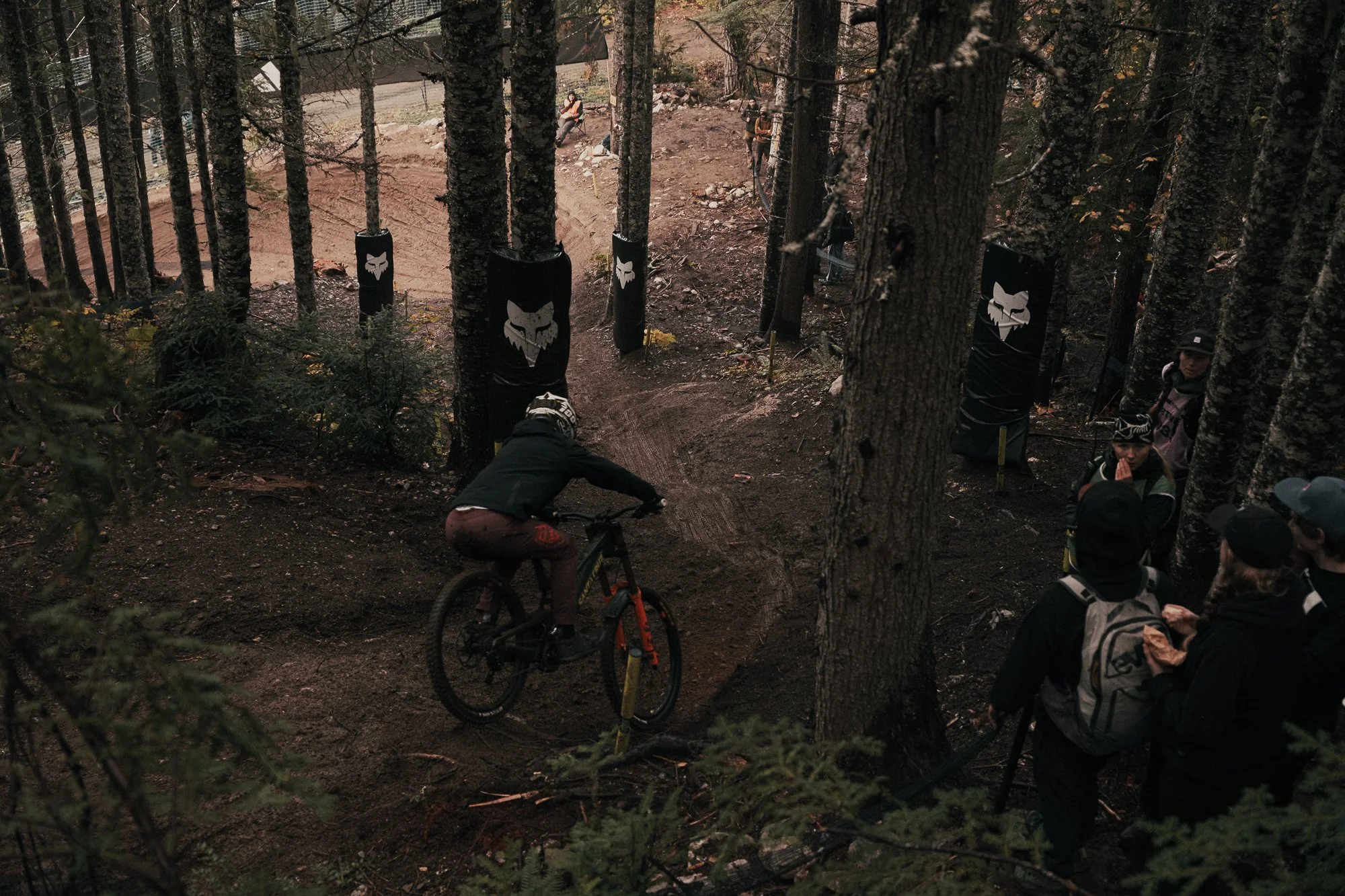
Race day came and the sun began to come out a little more, speeding up the track, and bringing some interesting light… Some of the race day photos…
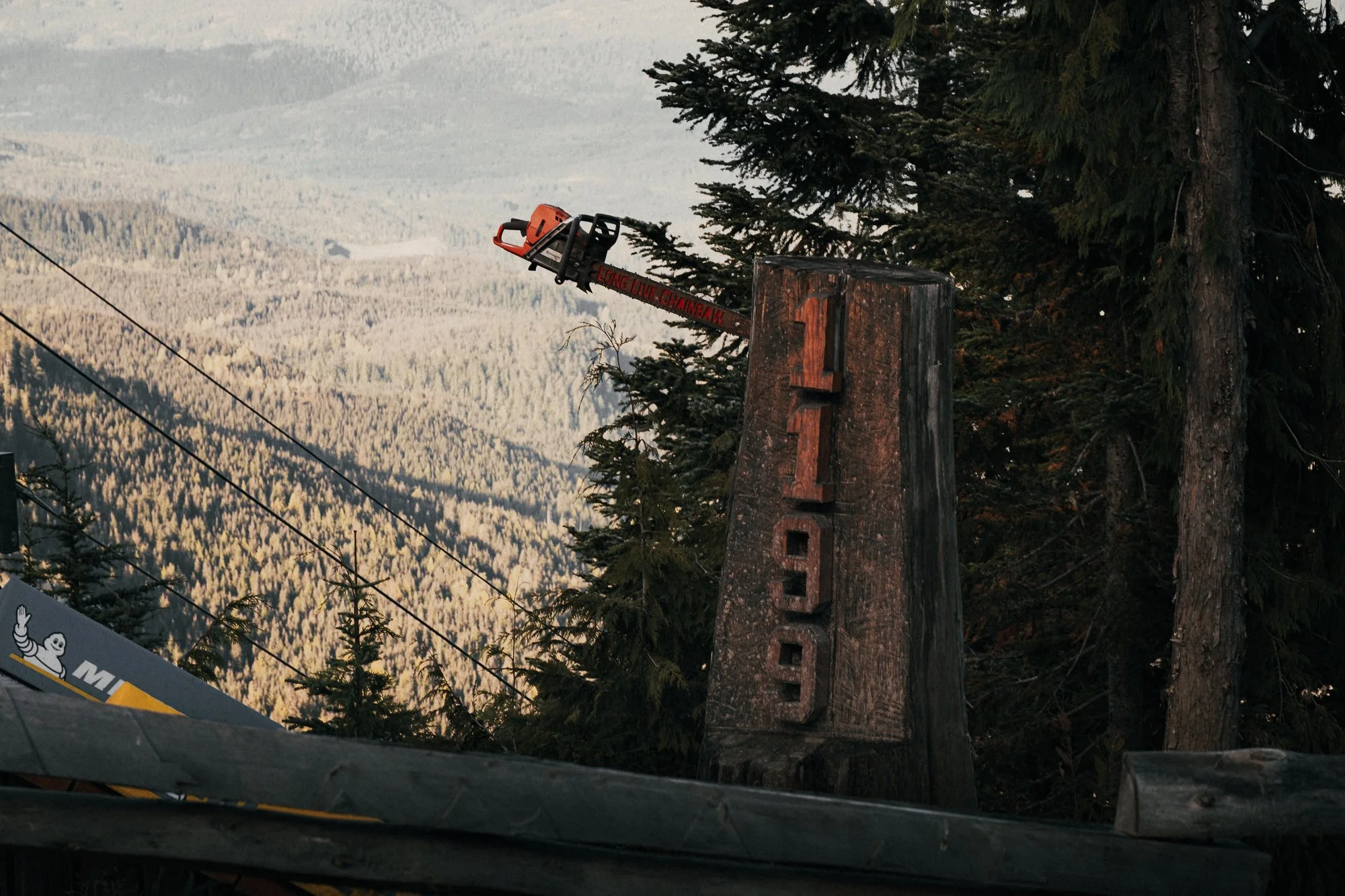
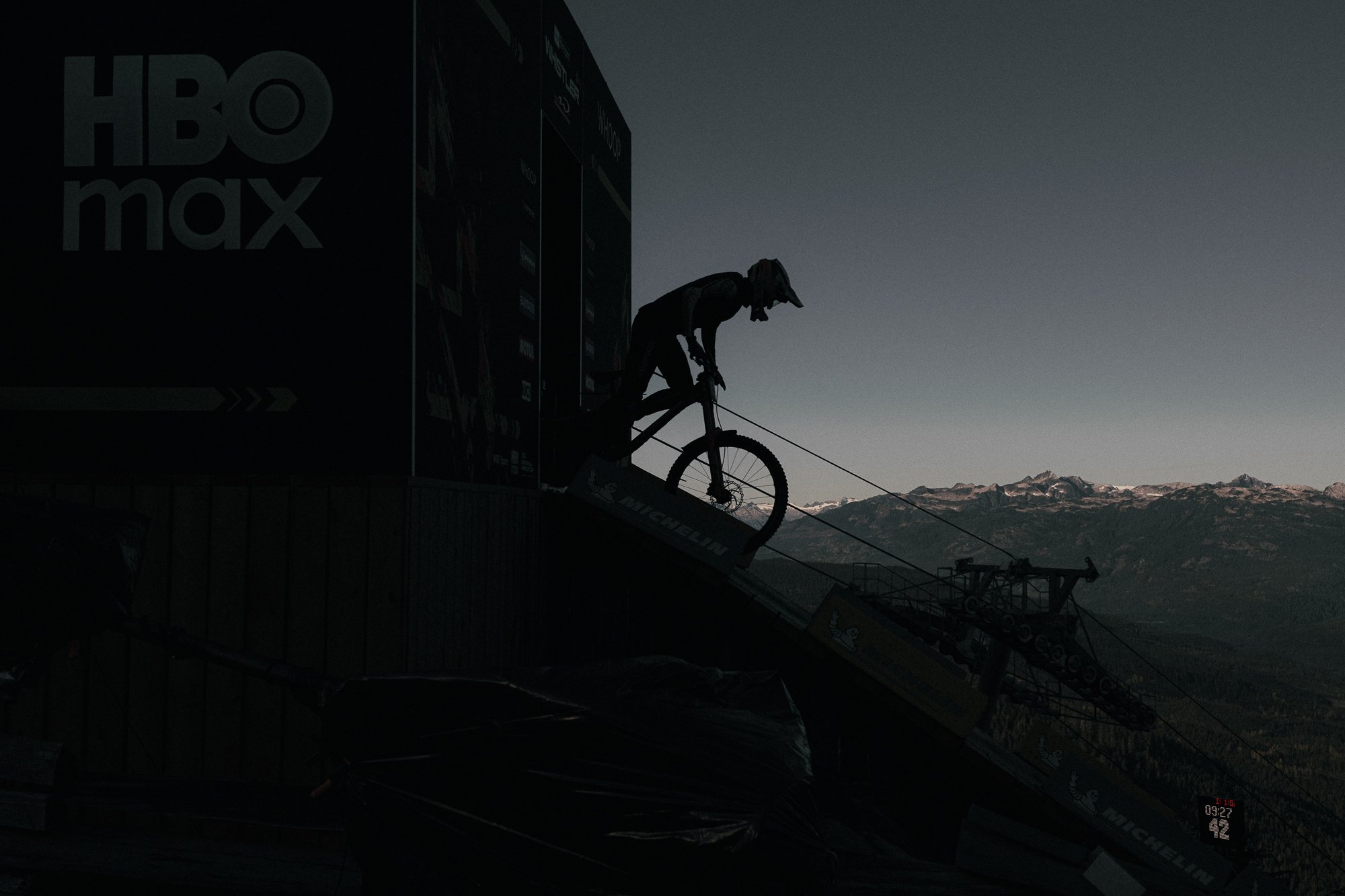
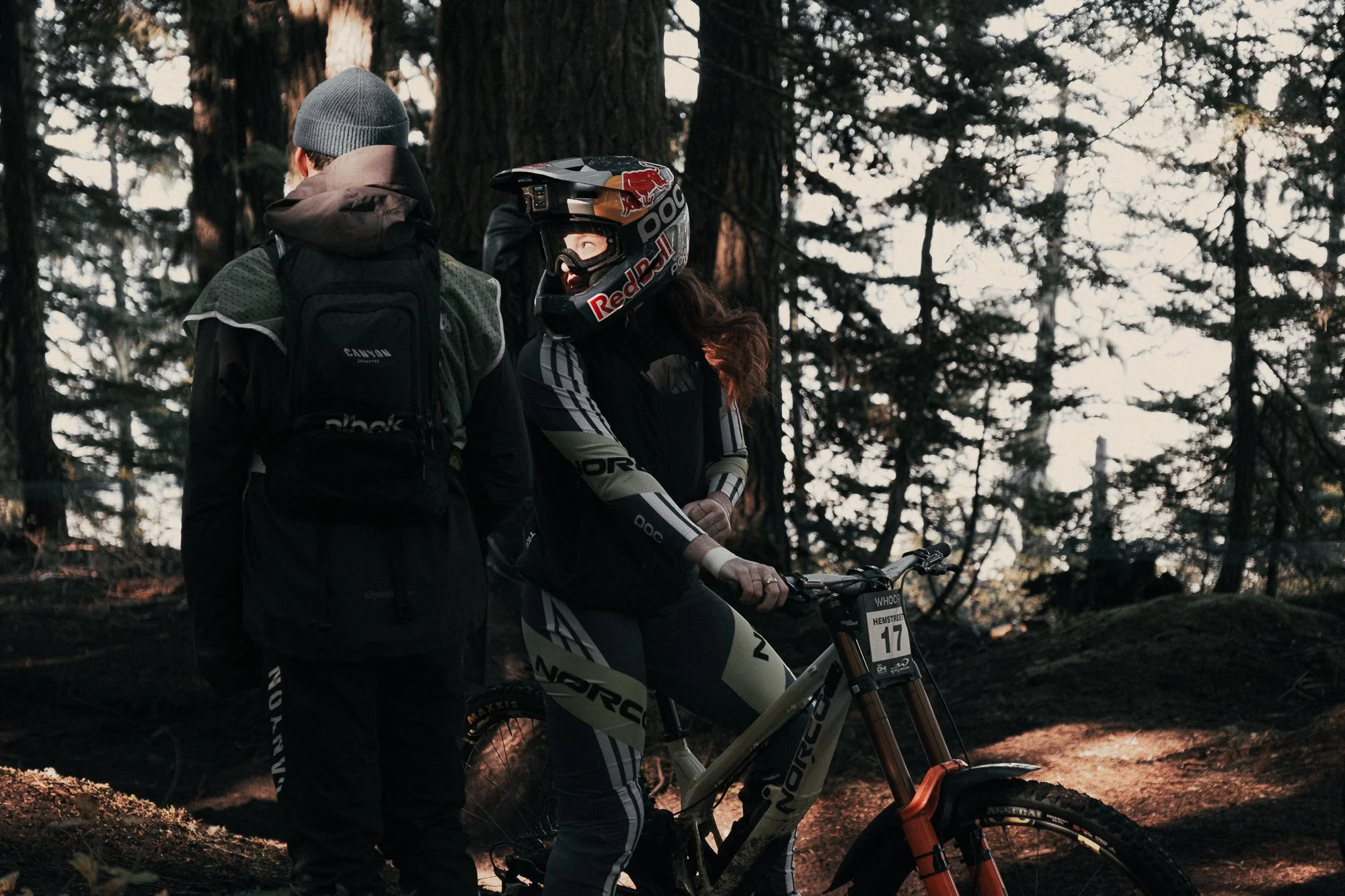
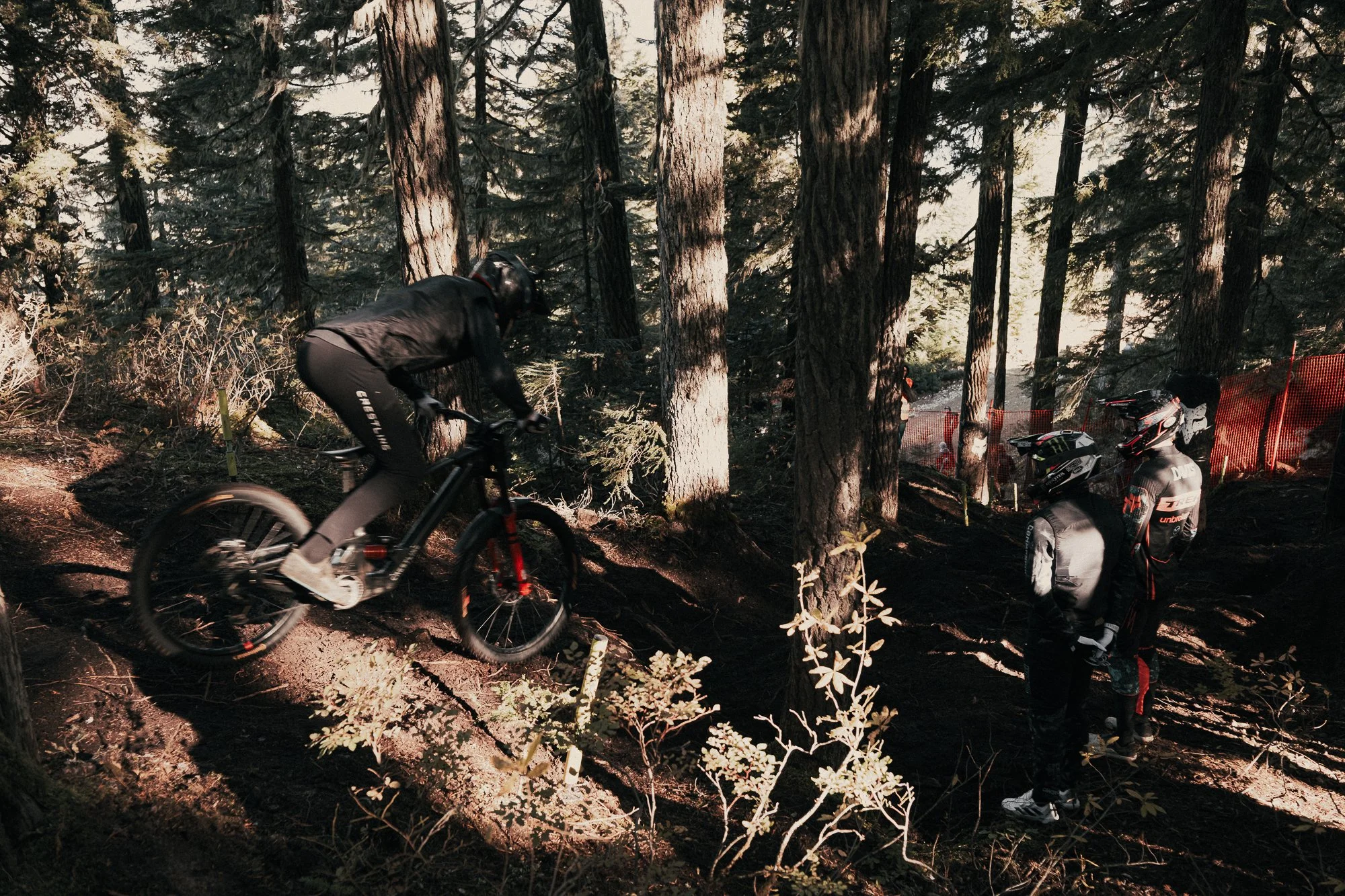
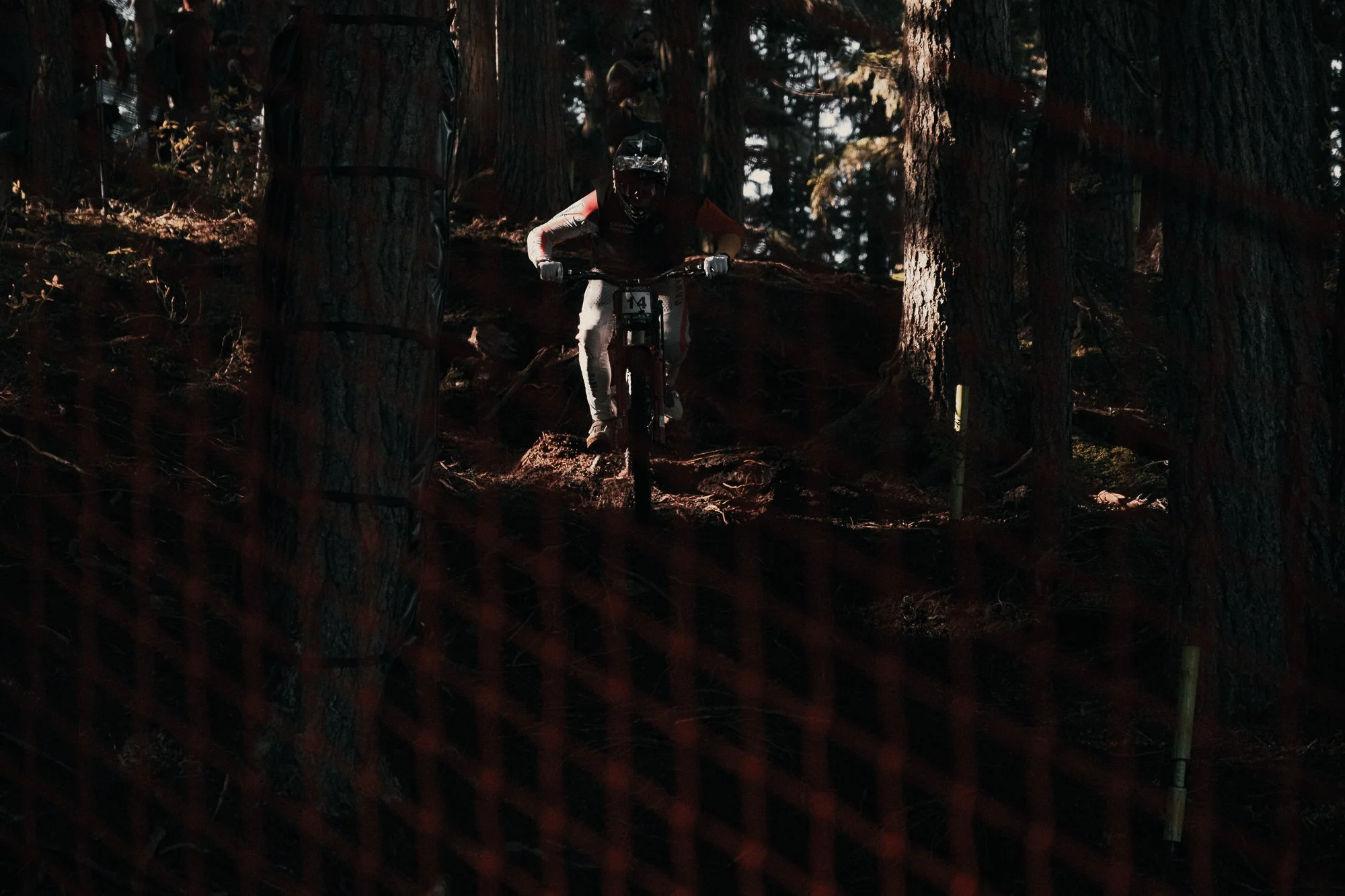
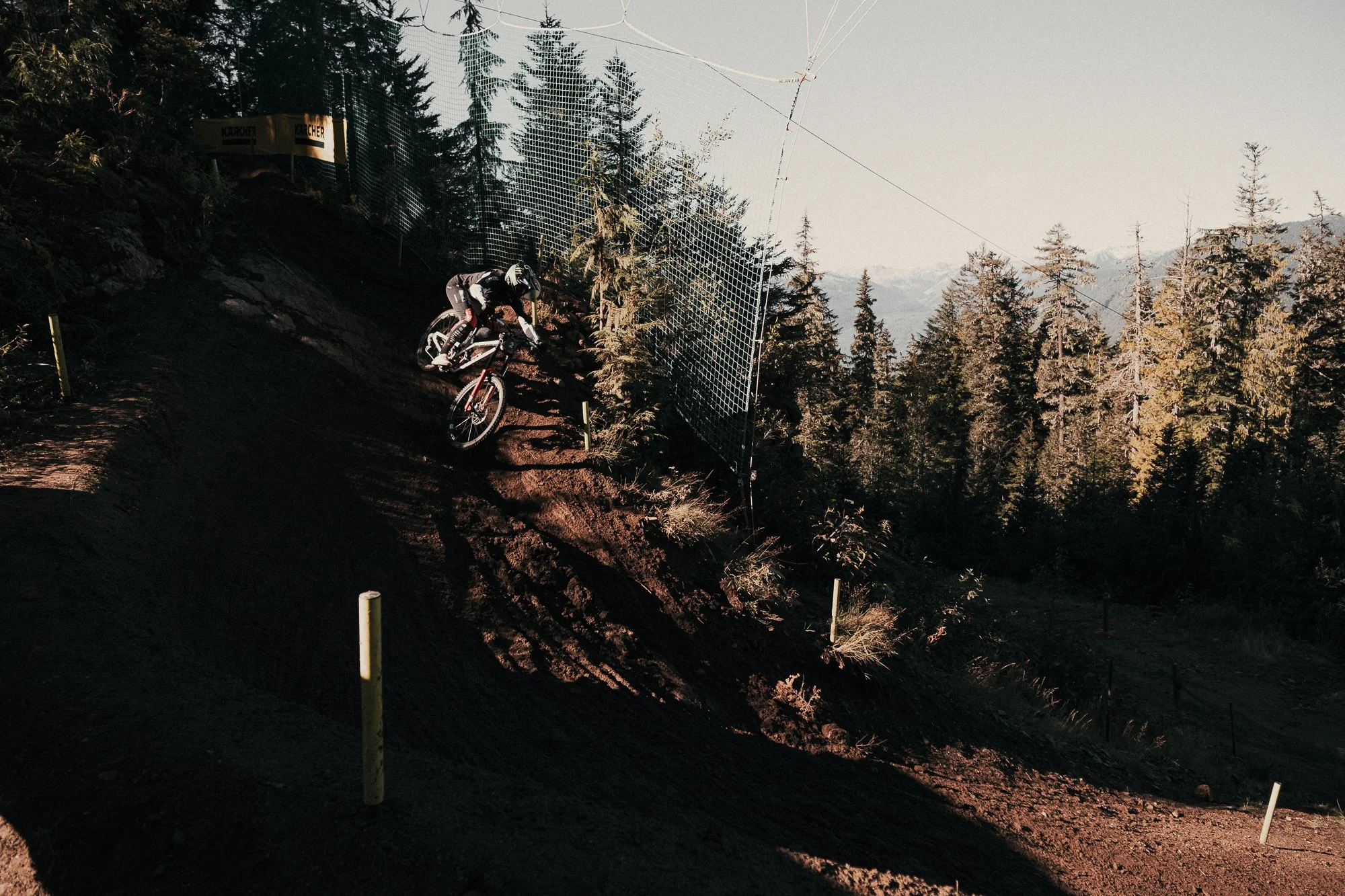
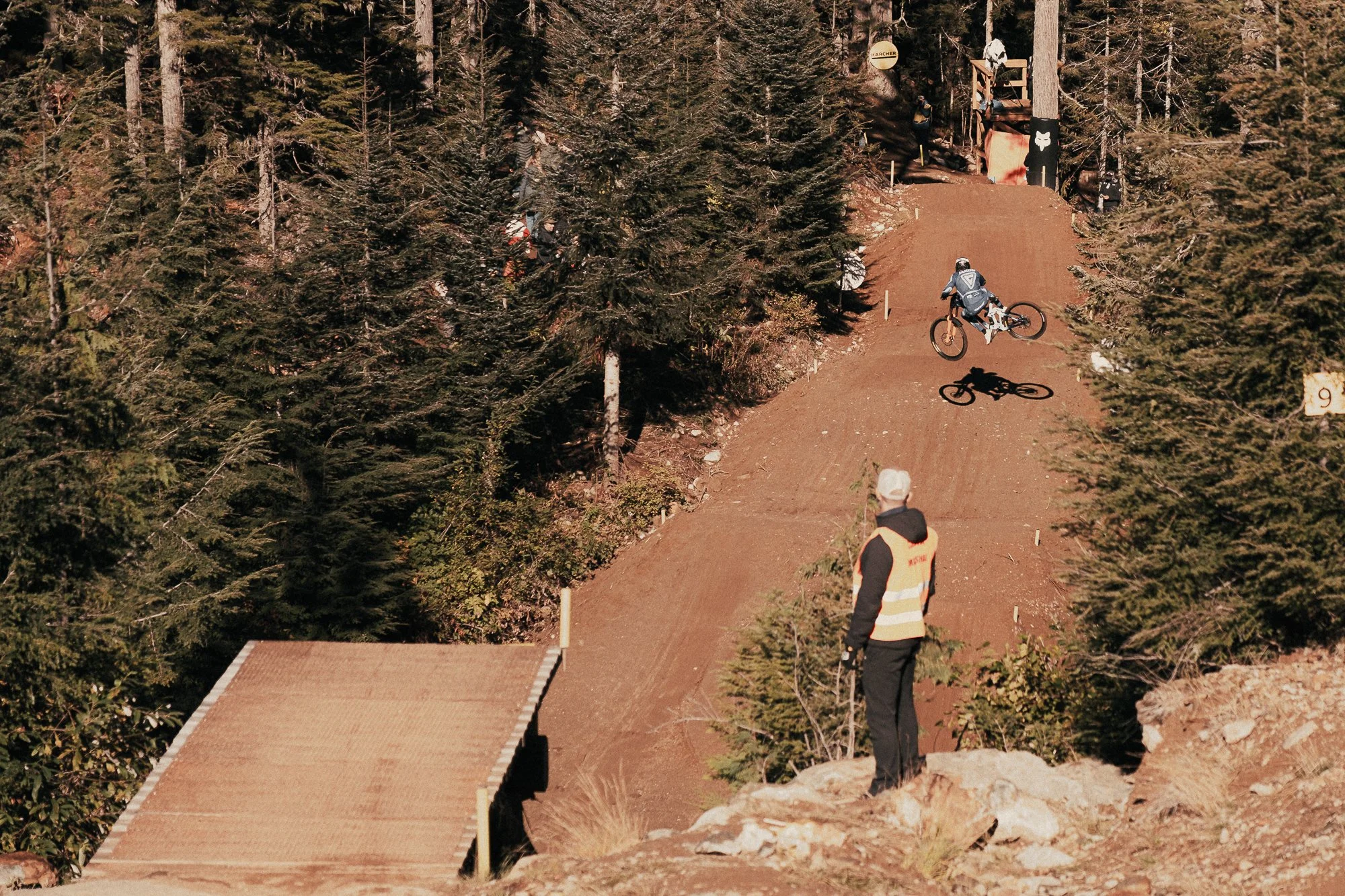
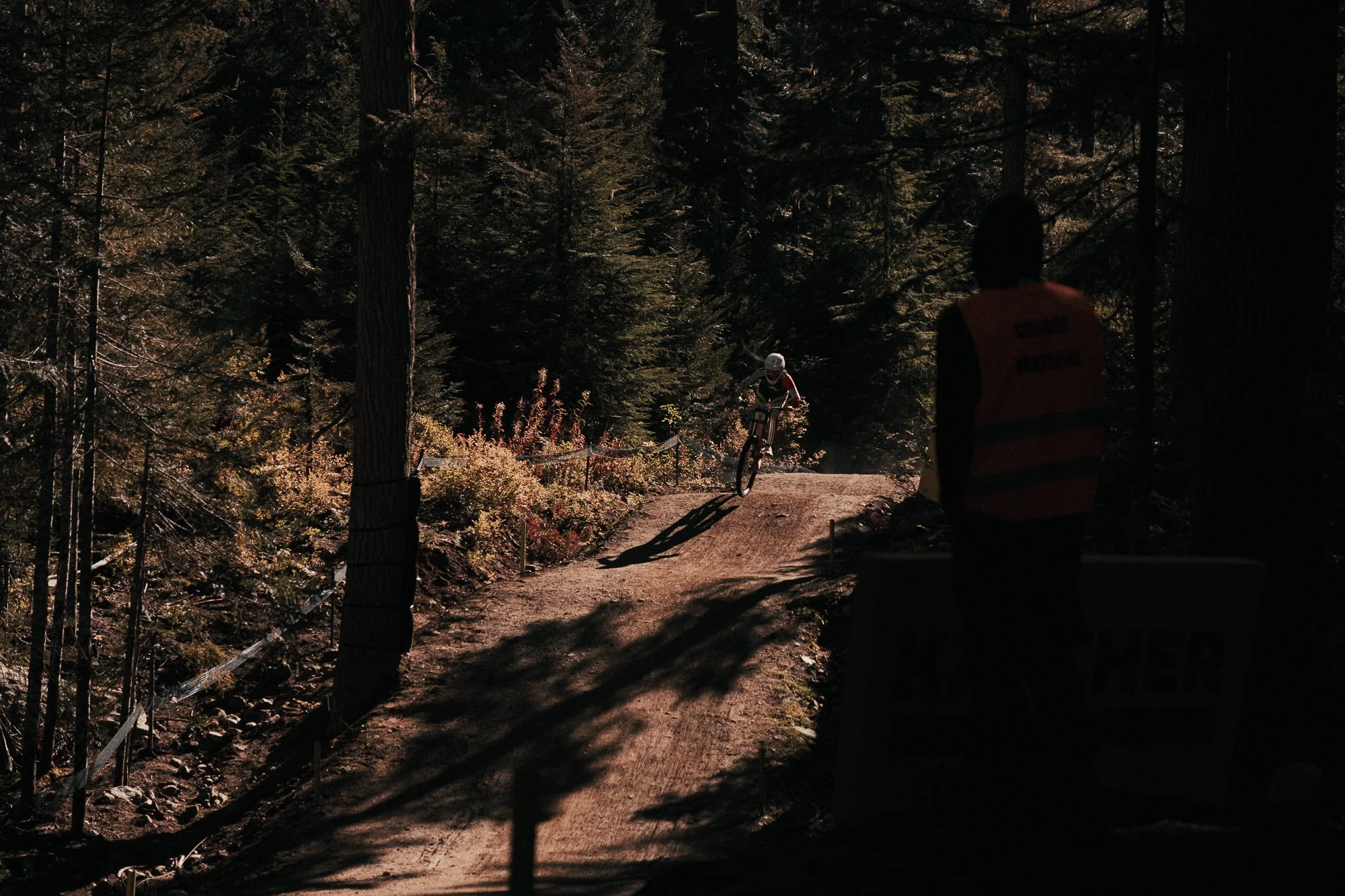
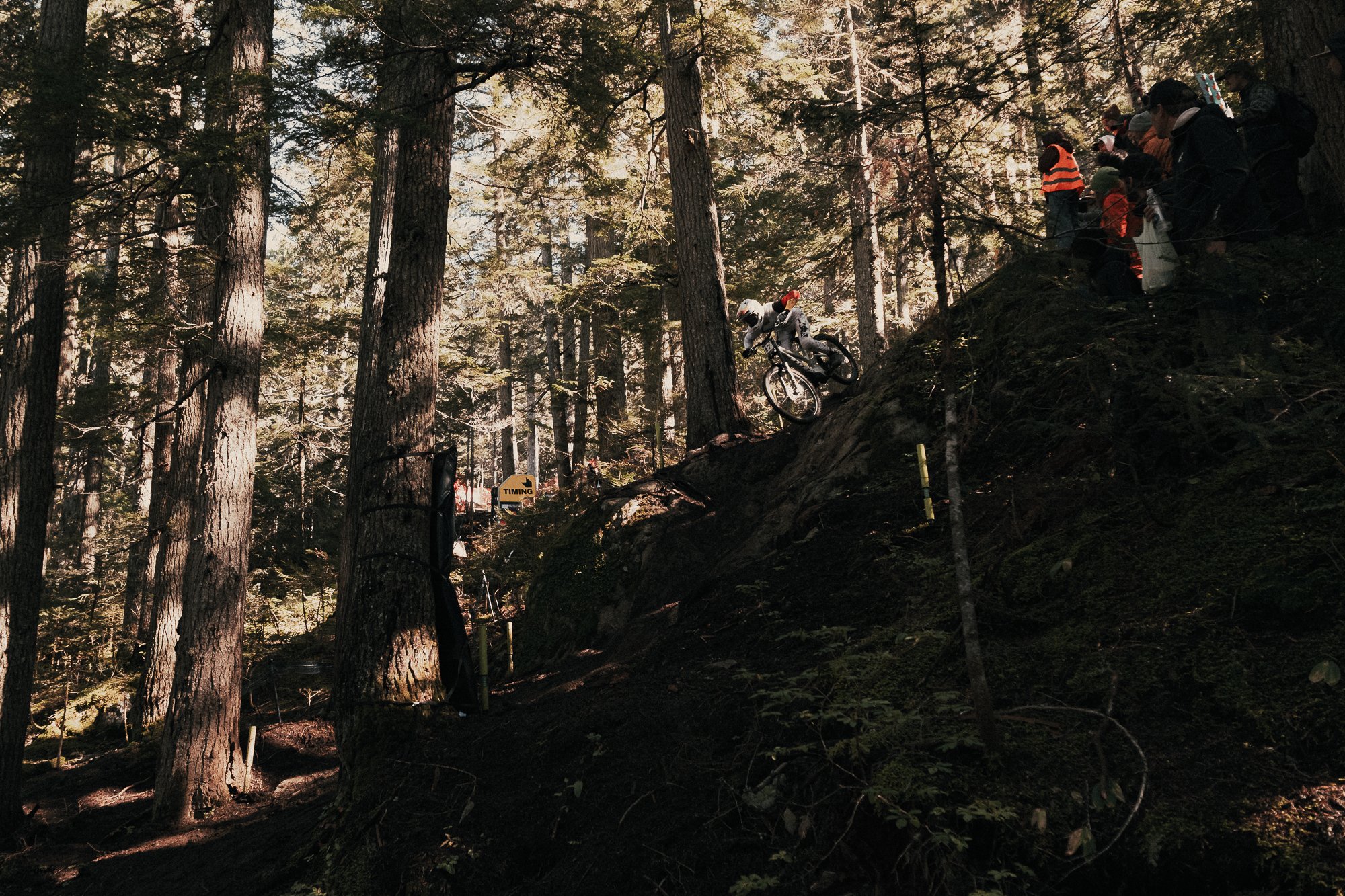
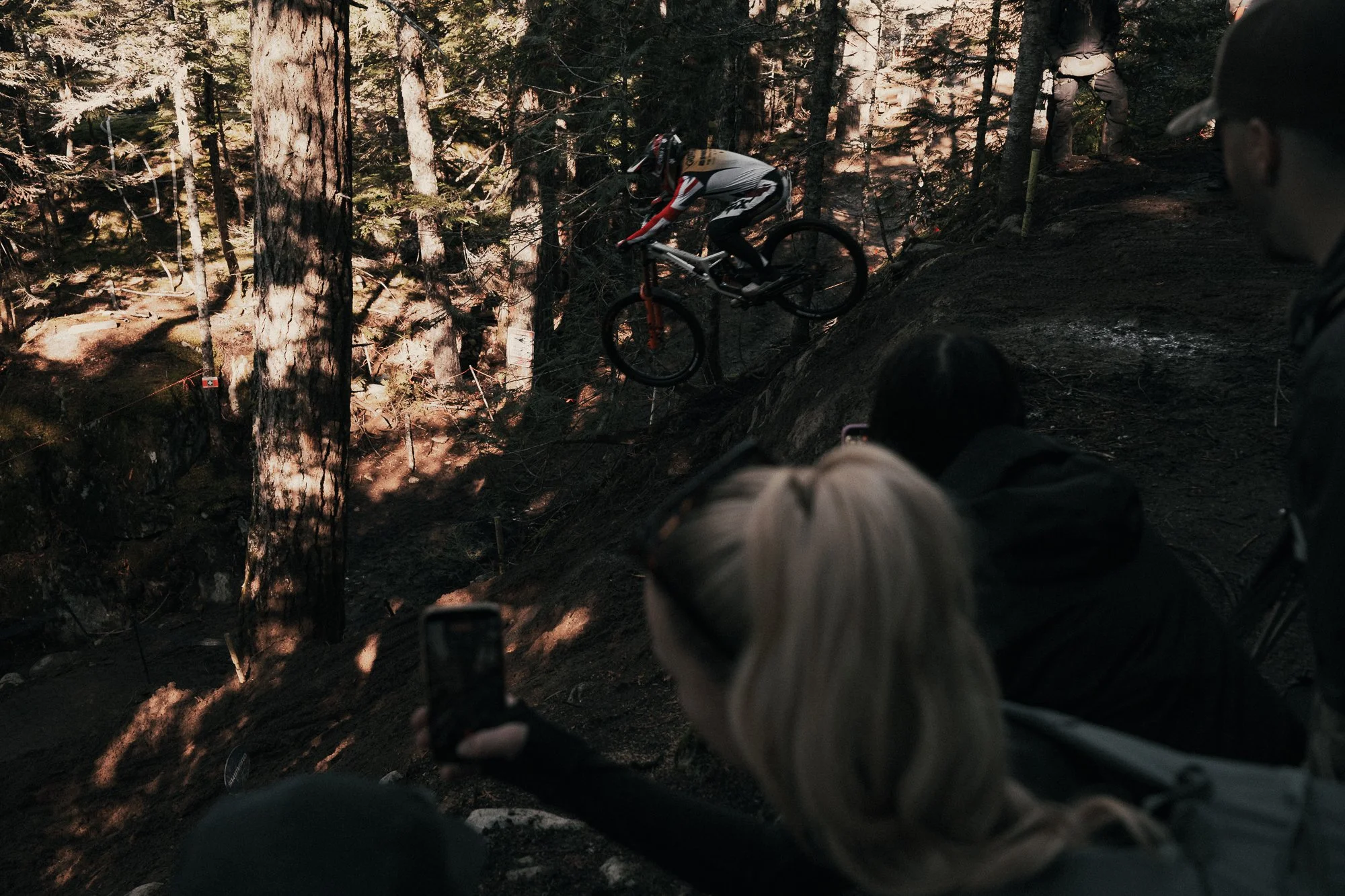
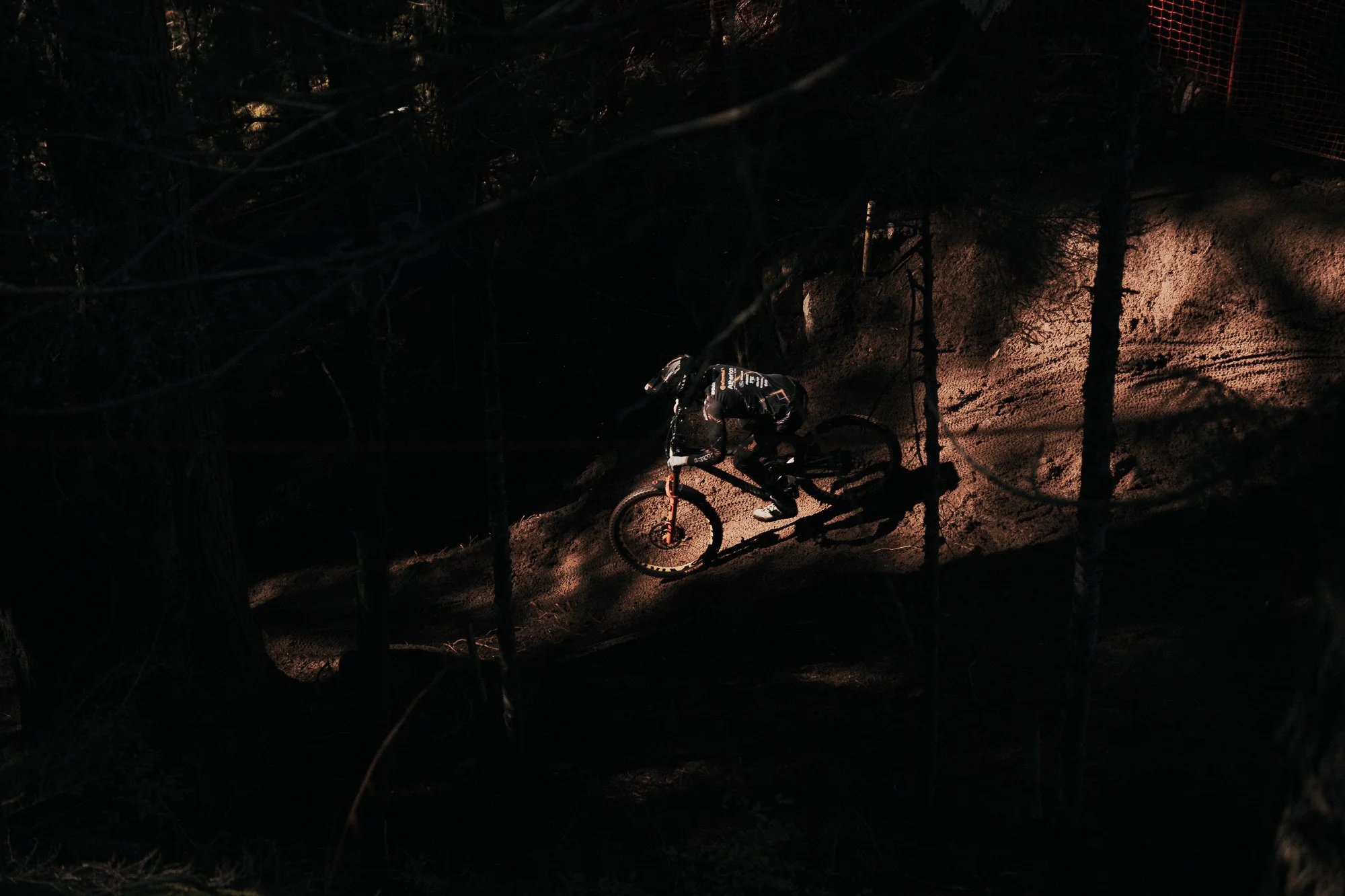
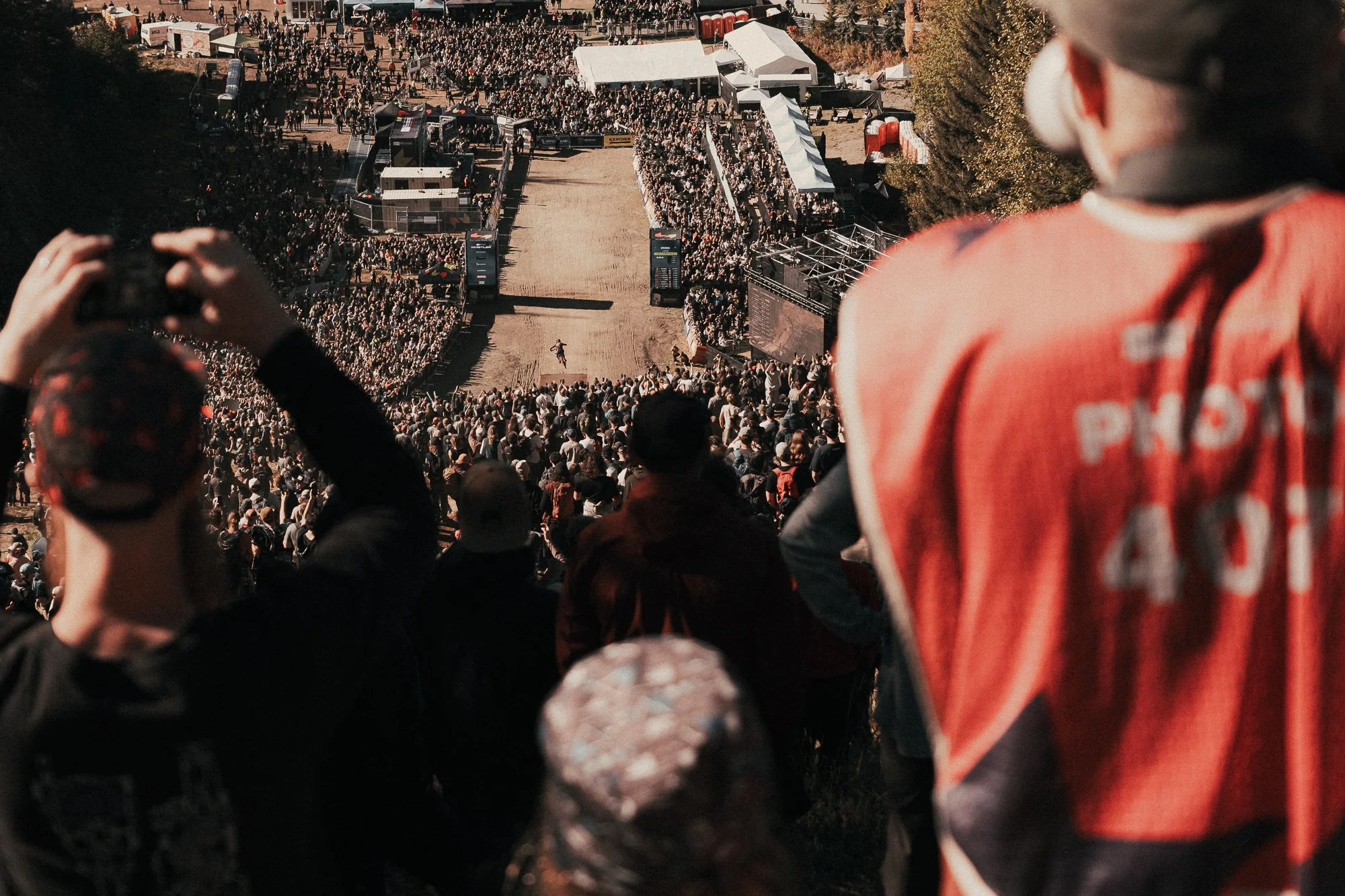
Asa Vermette taking the win by over 4 seconds, which is huge…
Back down in Creekside, a much smaller area than the main village, but still with a pedestrian street meandering through the buildings…
Finally, if there was another reason needed not to do channelized right turn lanes… The islands just aren’t big enough for a bunch of race fans leaving the venue…